PECHS — Pakistan Employees Co-operative Housing Society — is one of Karachi's most distinctive pest zones, and we treat it differently from any other neighbourhood in the city. It is a mixed-density commercial-residential mosaic with three overlapping pest realities: termite-heavy older bungalows in Blocks 2 and 6, intense rodent and American cockroach pressure along the Tariq Road food corridor, and a growing dengue mosquito risk fed by the Sharah-e-Faisal monsoon-saturated drains. We service PECHS multiple times a week from our DHA Phase 4 office — a 25-40 minute drive. This guide is our PECHS-specific pest playbook: what we see block by block, the chemistry we use, what a job actually costs, and how to book us.
Why PECHS Karachi Pest Pressure Is Distinct
PECHS does not have a single pest profile. The blocks were laid out in different decades, the building stock varies wildly, and the Tariq Road commercial strip injects a continuous food trail right through the middle of the society. Treating PECHS Block 2 the same way as a Bahadurabad apartment would miss the point — and miss the pest. Here is how we segment the work.
PECHS Block 1 (Sharah-e-Faisal Strip)
Block 1 sits hard against Sharah-e-Faisal with commercial frontage on the main artery and residential lanes behind. Pest pressure is dominated by commercial-garbage carryover: rodents (Rattus norvegicus) and American cockroach (Periplaneta americana) push inward every night from takeaway shops and uncovered municipal bins. Ground floors and back-lane bungalows take the hit. We treat perimeter walls and floor drains harder in Block 1 than anywhere else in PECHS.
PECHS Block 2 + 6 (Older Bungalows — The Termite Belt)
Blocks 2 and 6 are PECHS's termite belt: 1970s and early-80s lath-and-plaster bungalows with mature gardens and decades of undisturbed Coptotermes heimi establishment under the plinth. Signature damage is mud-tube columns rising 3-5mm wide up the inside face of the plinth wall, frass pellets behind doorframes, and hollow skirting boards. Heterotermes indicola shows up less often, mostly in shaded garden edges. Between Block 2 and 6 we run roughly four to five post-construction termite jobs every month.
PECHS Block 3 + 4 + 5 (Mid-Density Residential)
Mixed building stock — original bungalows, 2000s-era multi-storey apartments, and infill construction. The pest profile shifts to German cockroach (Blattella germanica) in apartment kitchens, scattered termite in older houses, and the usual cockroach-plus-rodent baseline. Quarterly visits suit most families.
Tariq Road Corridor (Commercial Food Strip)
Tariq Road is the challenging zone — a continuous strip of restaurants, takeaways, bakeries, and sweet shops running from the Bahadurabad end down through PECHS. The food trail never stops, back-alley drains run open, and residential flats above the shops absorb the overflow. Periplaneta americana migrates up through floor drains overnight; Rattus norvegicus runs the service alleys year-round. We treat Tariq Road as its own micro-zone, with monthly contracts for restaurants and dedicated residential-above-shop plans.
The PECHS Termite Story (Coptotermes heimi)
Termite is the headline pest for Block 2 and Block 6, and the species we identify on almost every job is Coptotermes heimi — the dominant subterranean termite across coastal Karachi. It does not fly into the house. It tunnels up from soil, builds mud tubes along the plinth wall, and enters through any wood-soil contact: doorframes seated in masonry, skirting boards, untreated joists, garden trellises against the wall.
Visible signs on a Block 2 inspection: 3-5mm mud tubes climbing the inside face of the plinth wall, frass pellets like tiny coffee grounds near doorframes, and hollow-sounding wood on tap. We always pull a torch along the inside corners of the lowest skirting — that is where new tubes start.
Our treatment is Imidacloprid [2] 17.8% SC, Bayer Premise, diluted to 1% working solution and applied via a drill-and-inject grid at 30cm intervals along the affected wall base. Imidacloprid is a non-repellent — termites contact it without detecting it, carry it back into the colony, and transfer it to nestmates through trophallaxis. That cascade kills the colony rather than splitting it. Under PECHS soil conditions we get 7 to 10 years of residual on a properly executed job.
We do not use repellent pyrethroids for termite work. Repellent chemistry causes Coptotermes to detect the treated zone and budd off into multiple new harborages elsewhere in the structure — a worse outcome than no treatment.
The Tariq Road Cockroach + Rodent Story
Tariq Road is where the commercial pressure meets residential life, and it produces the toughest cockroach and rodent loads we handle in PECHS. Each species needs its own protocol.
American Cockroach (Periplaneta americana) — Sewer Migration
The big reddish-brown cockroach scuttling out of a Tariq Road bathroom drain at midnight is Periplaneta americana, and it almost always came up through the sewer line. We apply a residual perimeter band of Deltamethrin 2.5% WG (K-Othrine) around every floor drain and along the kitchen-bathroom skirting, paired with a bio-enzyme drain treatment that breaks the organic film inside the P-trap and a Cypermethrin perimeter spray on the compound wall. During peak season (August-September) we run monthly visits for Tariq Road residential clients above the shops.
German Cockroach (Blattella germanica) — Restaurant Kitchen
Blattella germanica — the smaller tan cockroach with two dark stripes behind the head — is the dominant species inside Tariq Road restaurant kitchens, and the harder challenge. The colony lives in warm void spaces (behind cooking ranges, under dishwasher motors, inside cabinet hinges) and an indoor spray scatters it into adjacent flats rather than killing it. Our restaurant IPM uses Indoxacarb 0.6% Advion gel bait in pea-sized dots at cabinet hinges, dishwasher gaskets, behind the cooking range, and under stainless prep tables. We pair it with Pyriproxyfen IGR to break the egg-development cycle, and a boric acid void puff in dead spaces. No indoor liquid spray. Monthly contracts are standard — required documentation for SECP and Sindh Food Authority [3] health-license compliance.
Rodent Pressure (Rattus norvegicus + Rattus rattus)
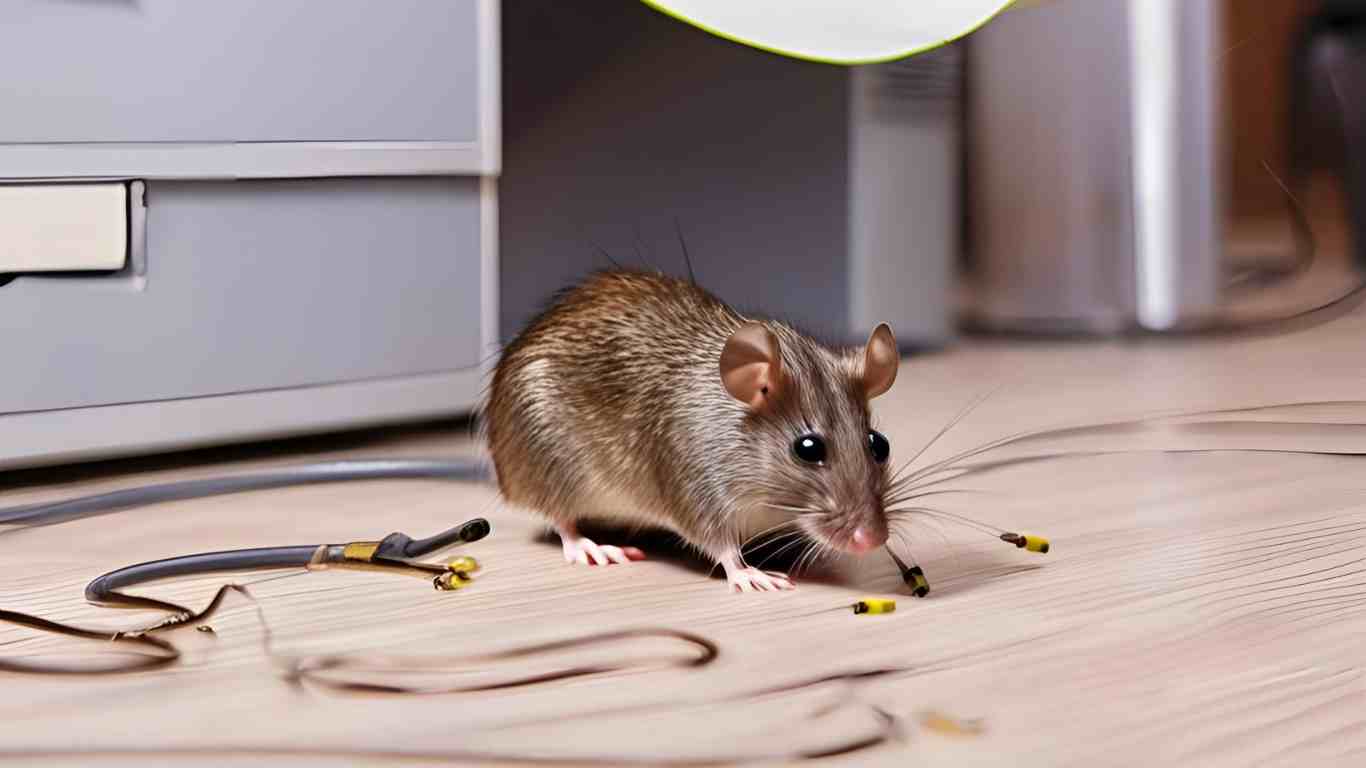
Norway rat (Rattus norvegicus) runs the Tariq Road service alleys; roof rat (Rattus rattus) climbs the back-side service pipes into top-floor apartments and roof tanks. Our treatment is Bromadiolone [4] 0.005% bait in tamper-resistant lockable stations, placed against alley walls in commercial zones and at building entry points in adjacent residential blocks. Monthly monitoring and bait refresh, with every station numbered and logged per ISO 9001:2015. We GPS-tag each station on commercial contracts so a new technician can pick up the route without losing continuity.
The Mosquito Story (Aedes aegypti)
PECHS is less mosquito-exposed than coastal DHA, but the risk is real and growing. Aedes aegypti — the dengue vector — breeds in clean stagnant water, not open sewage, so roof tanks, AC drip trays, plant saucers, and uncovered overhead reserves are the high-risk sites. Sharah-e-Faisal stormwater drains that back up during the August-September monsoon add an outdoor reservoir near Block 1.
Peak dengue risk in Karachi runs August through October. Our protocol layers three actives: Bti (Bacillus thuringiensis israelensis) tablets in roof tanks and overhead reserves; indoor ULV cold fog of synergised pyrethrum for flying adults; and outdoor perimeter Cypermethrin during peak weeks. Bti is the workhorse — selective for mosquito larvae and safe in domestic water tanks at the dilutions we use.
What a PECHS Job Looks Like
The workflow is the same every time, and we document every step.
- Phone or WhatsApp inquiry on +92-311-1101810, available 24/7.
- Same-day site visit dispatched from our DHA Phase 4 office. Typical reach time to PECHS is 25-40 minutes depending on Korangi Road and Sharah-e-Faisal traffic.
- Free inspection — a 30-45 minute walk of the property. Roof tank, ground-floor floor drains, plinth wall on all four sides, kitchen cabinet hinges, bathroom skirting, and back-alley garbage points.
- Verbal quote on the spot, written quote emailed within 4 hours with chemistry, schedule, and warranty terms.
- Treatment scheduled within 24-48 hours of acceptance.
- ISO 9001:2015 logbook entry on completion — date, technician name, chemistry, batch number, dilution, and area covered.
- Follow-up call at day 5 and a return visit at day 14 for cascade treatments (termite, German cockroach).
- Annual maintenance contract option for Tariq Road commercial clients and Block 2/6 termite-history bungalows, with a 20% per-visit discount.
PECHS-Specific Pricing (2026)
| Service | Property | Range (PKR) |
|---|---|---|
| 1-bedroom apartment, Block 3-5 | Cockroach + general | 3,500 – 5,500 |
| 3-bedroom house, Block 2/6 | Termite + cockroach | 9,000 – 14,000 |
| 5-bedroom + garden, Block 2/6 | Comprehensive | 14,000 – 22,000 |
| Termite treatment (post-construction) | Block 2/6 older bungalow | 18,000 – 32,000 |
| Tariq Road restaurant | Monthly contract per visit | 8,000 – 14,000 |
| Tariq Road residential above shops | Rodent + cockroach | 7,500 – 12,000 |
| Mosquito IPM | Any | 6,500 – 11,000 |
| Annual maintenance contract | Any | -20% per visit |
Indicative ranges only — final quote depends on plot size, severity, and access. See our full pest control prices page for the citywide rate card.
Frequently Asked Questions
How fast can you reach my PECHS address?
Same-day across Blocks 1 through 6. Typical reach time from our DHA Phase 4 office is 25-40 minutes depending on Sharah-e-Faisal and Korangi Road traffic. For urgent restaurant calls we dispatch immediately.
Do you treat restaurant kitchens on Tariq Road?
Yes — Tariq Road restaurants are one of our regular monthly contract segments. We use Indoxacarb 0.6% Advion gel, Pyriproxyfen IGR, and bio-enzyme drain treatment. No indoor liquid spray. Documentation is provided in a format accepted by SECP and Sindh Food Authority health-license auditors. See our commercial pest control services page for the full protocol; the dedicated /commercial-pest-control-karachi/ deep-dive goes live early August.
What about my older Block 2 bungalow with termite damage?
Standard post-construction termite treatment. We drill an injection grid at 30cm intervals along the affected wall base and inject Imidacloprid 17.8% SC at 1% working solution. Pricing runs PKR 18,000 to 32,000 depending on plot size and number of affected walls. We provide a 10-year warranty in writing. Details on our termite control services page.
Is the chemistry safe for kids and pets?
Yes, applied as specified. Imidacloprid for termite is injected under the plinth and floor — sealed away from occupant contact post-treatment. Indoxacarb cockroach gel is placed under cabinet hinges and inside void spaces, out of reach of children and pets. Deltamethrin indoor residual carries a 60-minute re-entry after spray-dry. Bromadiolone rodent bait goes only into tamper-resistant lockable stations. We brief every household before treatment.
Do you do night service for restaurants?
Yes. Tariq Road restaurants typically schedule treatment after service close, between 23:00 and 02:00. We finish before dawn so the kitchen is ready for the next morning's prep without disruption.
Is annual maintenance worth it for residential?
For older Block 2 and Block 6 bungalows with any termite history: yes, the annual contract pays for itself in the first prevented re-infestation. Monthly visit, 20% per-visit discount, and continuous logbook documentation. For mid-density Block 3-5 residential without history: quarterly visits are usually sufficient.
Are you certified?
ISO 9001:2015 quality management certified. SPMA (Sindh Pest Management Association) member. PPMA (Pakistan Pest Management Association) member. KCCI registered. We carry full documentation on every visit and can produce certificates on request.
Get Pest Control in PECHS Karachi
Call or WhatsApp us on +92-311-1101810. Email contact@nestfumigationservices.com. Office hours Monday to Saturday, 09:00 to 17:00, with emergency dispatch outside hours for restaurant and commercial clients. Our founder Saad Danish runs the company from our office at Plot 14, 2/1 2nd Gizri Street, DHA Phase 4, Karachi — 25 to 40 minutes from any PECHS address. We will inspect your property on the same day you call, walk you through the chemistry, and provide a written quote within 4 hours. Every job is logged to ISO 9001:2015 standard. We are SPMA, PPMA, and KCCI registered, and we are proud of the 143 verified Google reviews our PECHS, Tariq Road, and DHA clients have written for us. See our all pest control services page for the complete service list.