







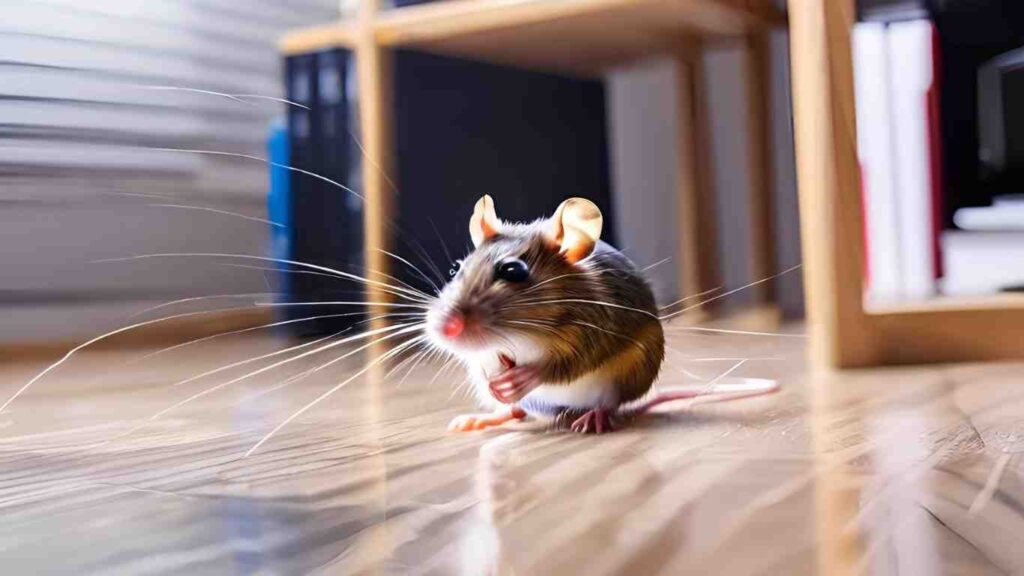
If you searched "rat killer," you have rats. You need to know which product on the pharmacy shelf actually works, what it costs, whether it's safe around kids and pets, and what to do when the cheap stuff doesn't.
This guide is written from the field. At Nest Fumigation Services we run roughly 60 to 80 rodent jobs a month across Karachi — DHA, Clifton, Gulshan-e-Iqbal, PECHS, Korangi. Most calls start the same way: the customer has tried two or three retail products before phoning us. We see which ones move the needle and which quietly fail.
This is informational first. We sell a rodent control service, but we won't pretend DIY products are useless to push you into hiring us. For small early infestations, the right pellet or trap from a Karachi pharmacy does the job. For everything else we'll tell you honestly where the cutoff is.
Disclosure: Informational page reflecting our Karachi operational experience. For emergencies after accidental exposure, contact your physician or go to a hospital ER immediately.
Quick answers (you searched, here's the answer)
| Product type | Best for | Approx. price (PKR, 2026) | Where to buy |
|---|---|---|---|
| Anticoagulant pellets | Small to moderate infestations; rats in walls, ceilings, sewers | Rs 150–600 per pack | Pharmacies, hardware, Daraz |
| Snap traps | 1–3 mice in a kitchen or pantry | Rs 100–400 each | Hardware, kirana, Daraz |
| Glue boards | Quick monitoring of small mice | Rs 80–250 each | Pharmacies, hardware |
| Electric traps | Reusable, humane kill | Rs 4,000–12,000 | Daraz, specialty hardware |
| Rat killer sprays | Mostly marketing; limited real use | Rs 350–800 per can | Hardware, Daraz |
| Ultrasonic repellers | Honest answer: skip them | Rs 800–3,500 | Daraz, electronics |
| Professional rodent control | Recurring, commercial, bandicoots, wiring damage | Rs 6,000–25,000 per visit | Service providers in Karachi |
One or two mice in the kitchen? Two snap traps and a small bait box. Scratching in the ceiling, rice-grain droppings, or already used poison with no result? Keep reading.
The 4 types of rat killer products available in Pakistan
Pakistani retail is dominated by four categories. Brand names rotate every few months and counterfeits are common at lower price tiers, so we describe each by mechanism rather than brand.
1. Anticoagulant pellets (most common)
Anticoagulant rodenticides are the workhorse — 10–20 g wax blocks, loose grain bait, or moulded cakes, usually dyed green, blue, or pink. The active ingredient is a second-generation anticoagulant (bromadiolone [1], brodifacoum [1], or difenacoum) at 0.0025% to 0.005%.
The mechanism is delayed bleeding. The rodent eats the bait, vitamin K recycling stops, clotting fails over 3 to 7 days, and the rat usually dies in its nest. The delay is a feature — rats are neophobic and watch each other's reactions to new food. A fast-acting bait would be avoided within a day; delayed-action anticoagulants are taken by the whole colony before the first death.
Practically:
- No dead rats for at least 3 days. Customers who switch products at day 2 are the most common reason DIY fails — the bait was working; they pulled it too early.
- You will probably get a smell. Rats dying in wall cavities smell for 7 to 14 days in Karachi summer humidity. Use bait in attics, sewers, gardens, and dedicated stations — not inside living spaces.
- One feed is rarely enough. Refill every 3–4 days until consumption stops.
Pellets work well for roof rats (Rattus rattus) and house mice (Mus musculus). They struggle against the larger bandicoots (Bandicota bengalensis) common in Karachi's drains — retail doses are calibrated for a 200 g rat, and a 1.2 kg bandicoot needs six times the consumption.
Safety — read carefully:
- Secondary poisoning of cats is real. A cat that catches a poisoned rat can absorb enough anticoagulant to cause internal bleeding. We've heard from customers who lost cats this way after using retail rodenticides; the symptoms typically appear days after the rat was killed. If you have a hunting cat, use locked tamper-resistant bait stations and remove dead rodents promptly.
- Toddler ingestion is a hospital emergency. If a child swallows any amount of pellet, go to a hospital ER immediately and bring the packaging — the active ingredient name matters for treatment. Vitamin K1 is the standard antidote for anticoagulant rodenticide poisoning; major Karachi private hospitals carry it. Do not wait for symptoms.
- Small pet dogs are at moderate risk — a small breed that chews a pack is still a vet emergency.
If your home has children under five or free-roaming cats, default to traps rather than poison.
2. Rat killer sprays
The "rat killer spray" aerosols on Pakistani shelves cover three different products:
- Cypermethrin or deltamethrin aerosols mis-labelled as rat killer — pyrethroid insect sprays with negligible rodent effect (Rs 250–400).
- Repellent sprays based on peppermint, citronella, or capsaicin. They make an area smell unpleasant for 2 to 5 days but don't kill; they only push rats from one room to another.
- True rodenticide aerosols with zinc phosphide or anticoagulant powders. Uncommon (Rs 600–800), meant for inside burrows or wall voids — not spraying around a room.
Honest verdict: for an established infestation, sprays are the wrong tool. They cannot be placed in the harborages where rats actually live.
3. Trap-based (snap, glue, electric)
Traps remain the most reliable DIY tool for small infestations because the result is visible. Poison takes faith. Traps don't.
Snap traps are still the gold standard for one to three rodents. Wooden Victor-style traps cost Rs 100–200; sturdier plastic Rs 200–400. Bait with peanut butter pressed into the trigger. Place perpendicular to walls, trigger end touching the wall — rodents travel along walls, guided by their whiskers. Set 4 to 6 traps per rodent seen.
Glue traps (Rs 80–250) work for small mice but have two problems. Larger rats escape after losing fur or a limb, becoming trap-wary survivors. And the welfare issue is real — animals on glue struggle for 12 to 24 hours before dying. Not recommended where children might find them, or in settings checked less than every 12 hours.
Electric traps deliver a high-voltage shock — Rs 4,000–12,000. Humane, reusable, no poison risk in inaccessible areas. Drawbacks: price, power at the trap, one-rodent-at-a-time pace. For households with one or two mice and real concern about poison, they're our pick.
Placement matters more than brand. A Rs 100 snap in the right place beats a Rs 8,000 electric trap in the wrong place.
4. Ultrasonic devices
Plug-in ultrasonic repellers sell at Rs 800–3,500. Skip them. Independent reviews from the US Federal Trade Commission and Kansas State University extension trials have shown rodents habituate within days, and the sound doesn't penetrate walls. We've entered Karachi homes with three plug-ins running and active rat damage 2 metres away. Spend the Rs 1,500 on two snap traps and a fresh pack of pellets instead.
What works for which scenario
- One or two mice in the kitchen. Four snap traps along baseboards, peanut butter bait, plus a small enclosed bait station under the sink. Under Rs 1,500. Resolution: 5 to 10 days.
- Scratching in the ceiling, droppings in the attic. Roof rats using the ceiling-roof gap as a runway. Anticoagulant bait blocks wired to ceiling joists (loose bait gets scattered) plus snap traps along the runway. Expect a smell phase. Resolution: 10 to 21 days.
- Droppings plus chewed wires. Mature infestation. Bait + traps + entry-point sealing mandatory. Seal every gap larger than 6 mm with steel wool packed into cement — rats chew through foam and silicone. Chewed wires are a fire risk; don't delay.
- Bandicoot rats in the garden or from the sewer. Bandicoots are 1.0–1.5 kg, common around Korangi nullahs and older Saddar. Retail doses don't reliably kill them, and burrow networks re-populate after surface treatment. Professional service is the realistic answer.
- Rats during daylight. Colony saturation — by the time you see this you're looking at 30+ animals. Stop buying retail.
- Restaurant, godown, food unit, or warehouse. DIY isn't an option. Sindh Food Authority [2] inspections and HACCP supply chains require documented pest control by a licensed provider.
Safety: rat killers + kids + pets
Get this wrong and you have a hospital trip on a Sunday evening.
Anticoagulant pellets are the highest-risk product for accidental ingestion. The active ingredients take 24 to 72 hours to produce symptoms; by the time bleeding gums, blood in urine, or bruising appear, treatment is harder. If you suspect a child has eaten any pellet — even a small amount — go to an ER immediately and bring the packaging. Vitamin K1 is the standard antidote for anticoagulant rodenticide poisoning, and is carried by major Karachi private hospitals.
Pets are exposed two ways. Direct ingestion is the same emergency as a child. Secondary poisoning happens when a cat or dog eats a poisoned rodent before it dies — common because the rodent becomes sluggish. Most often in cats. Symptoms (lethargy, pale gums, weakness) appear 3 to 7 days later. Treatment runs 21 to 30 days under veterinary supervision because second-generation anticoagulants persist in liver tissue.
Pet-safe alternatives have trade-offs. "Natural" rat killers based on essential oils, garlic, or vinegar don't work on established infestations. Mechanical traps are pet-safe in inaccessible areas. Tamper-resistant locking bait stations (around Rs 800) are the practical compromise.
For families with children under five and/or free-roaming pets, professional IPM often wins on cost and safety — external locked stations, gel-bait in voids inaccessible to pets, and physical exclusion. See our rodent control service page for kid- and pet-safe treatment.
When DIY rat killer products stop being enough
Five signals the retail toolkit has been outgrown:
- Daytime sightings. Colony saturation. A single female mouse produces 5 to 10 litters of 5 to 8 pups per year; killing 4 rats a week loses ground to a colony producing 6 new ones.
- Repeat infestations within 90 days. The colony was never fully cleared.
- Commercial property. Restaurants, warehouses, clinics, hotels — stakes the retail toolkit wasn't designed for.
- Bandicoot evidence — tennis-ball burrows, mounded soil, runs in grass. Retail doses don't reach lethal levels in animals this size.
- Wiring, insulation, or structural damage. The question becomes "what's the cost of another month," not "will pellets work."
For any of these, you need a service. Our rodent control Karachi page walks through inspection and treatment.
How NFS rodent control compares to DIY
A fair comparison, not a sales pitch:
| Dimension | DIY pellets and traps | NFS professional rodent IPM |
|---|---|---|
| Cost (single residence) | Rs 1,000–4,000 over a month | Rs 6,000–18,000 per inspection + treatment |
| Time to control | 7 to 21 days | 2 to 5 days to significant reduction; close-out 14 to 21 days |
| Coverage | Visible interior spaces | Interior + roof void + boundary walls + sewer + entry points |
| Bait selection | One product for the whole job | Anticoagulant + non-anticoagulant rotation; gel for kid/pet households |
| Entry-point sealing | Rarely attempted | Included; steel wool and wire mesh at every gap |
| Re-treatment | None | 6-month guarantee on residential contracts |
| Commercial compliance | Not accepted | Meets Sindh Food Authority, HACCP, FBR audit requirements |
DIY has a legitimate place. Break-even comes around the second or third retail purchase — at that point a single professional visit costs less than cumulative DIY spend and resolves the underlying problem.
Where to buy rat killer in Pakistan
- Local pharmacies. Most stock pellets behind the counter. Quality varies — pellets sitting in heat for over a year lose potency. Look for a clear printing date.
- Hardware stores. Traps, glue boards, bait stations, sprays. Saddar, Bohri Bazaar, and Tariq Road have the widest selection.
- Daraz.pk. Good for traps and electric devices, but counterfeit pellets are common at low price tiers. Stick to verified sellers with recent reviews.
- Sunday markets. Itwar Bazaars carry the lowest prices. Buy mechanical traps here; be cautious with poisons.
Counterfeit pellets — coloured wax with little active ingredient — are common in Pakistani retail. A known-name pharmacy is the safest channel for poisons.
Frequently Asked Questions
Which rat killer works fastest in Pakistan?+
Snap traps and electric traps produce visible results in hours. For colony-wide kill, anticoagulant pellets take 3 to 7 days but cover populations traps cannot, because rats share food but avoid each other's death sites. Fastest visible and fastest effective are not the same.
Is rat killer poison safe for cats and dogs?+
No retail rat killer poison is meaningfully safe around free-roaming cats and dogs. Direct ingestion is an emergency; secondary poisoning from eating a poisoned rodent is also an emergency. If you have pets, use locked tamper-resistant bait stations or default to mechanical traps in pet-inaccessible areas. Vitamin K1 is the antidote.
Why do rats keep coming back after I use poison?+
Three reasons. You stopped baiting too early — anticoagulants take 3 to 7 days and survivors recolonise if bait is removed at day 2. You never sealed entry points, so the next wave walks back in. Or you have bandicoots, and retail doses are below lethal levels for them. Persistent re-infestation usually means a professional inspection is the next step.
Do ultrasonic rat repellers actually work?+
In our field experience, no. Independent US extension studies have failed to show sustained deterrence, and we've entered Karachi homes with multiple repellers active and live damage 2 metres away. The sound doesn't penetrate walls, and rodents habituate within days. Spend the money on snap traps and a bait station instead.
How do I tell if I have mice or rats in my Karachi home?+
Look at droppings. House mouse droppings are rice-grain size (3–6 mm), pointed at both ends. Roof rat droppings are larger (10–12 mm), spindle-shaped, in scattered runs along beams. Bandicoot droppings are largest (15–20 mm), capsule-shaped, near burrow entrances. Mouse activity is usually one or two rooms near food; rat activity covers larger ranges including roof voids and sewers.
Can I use rat killer if I have small children at home?+
Use traps and child-safe alternatives by default. If you must use poison, place it only inside locked tamper-resistant bait stations, in locations a child cannot reach. Keep packaging findable in case of accidental exposure — the ER needs the active ingredient name. For households with children under five and active infestation, professional service using gel formulations in inaccessible voids is usually safer.
What's the difference between mouse killer and rat killer?+
Mechanically, very little. Active ingredients are the same; the difference is dose. "Mouse killer" uses smaller blocks (around 5 g) sized for a 20 g mouse. "Rat killer" uses 15–20 g blocks for a 200 g rat. Either will work on the other species; right-sized blocks just reduce waste.
When should I stop trying DIY and call a service?+
After the second failed product cycle, or when any of the five signals above apply: daytime sightings, repeat infestations within 90 days, commercial property, bandicoot evidence, or wiring/insulation damage. The break-even is usually around the third retail purchase.
When to call us (NFS rodent control, Karachi)
NFS has been treating rodent infestations across Karachi since 2024. ISO 9001:2015 certified; members of KCCI, SPMA, and PPMA; 175 reviews on our Google Business Profile. We service all major Karachi neighbourhoods Monday–Saturday, 9:00 AM to 9:00 PM (closed Sunday). WhatsApp a photo to +92-311-1101810 or visit our rodent control Karachi service page.