







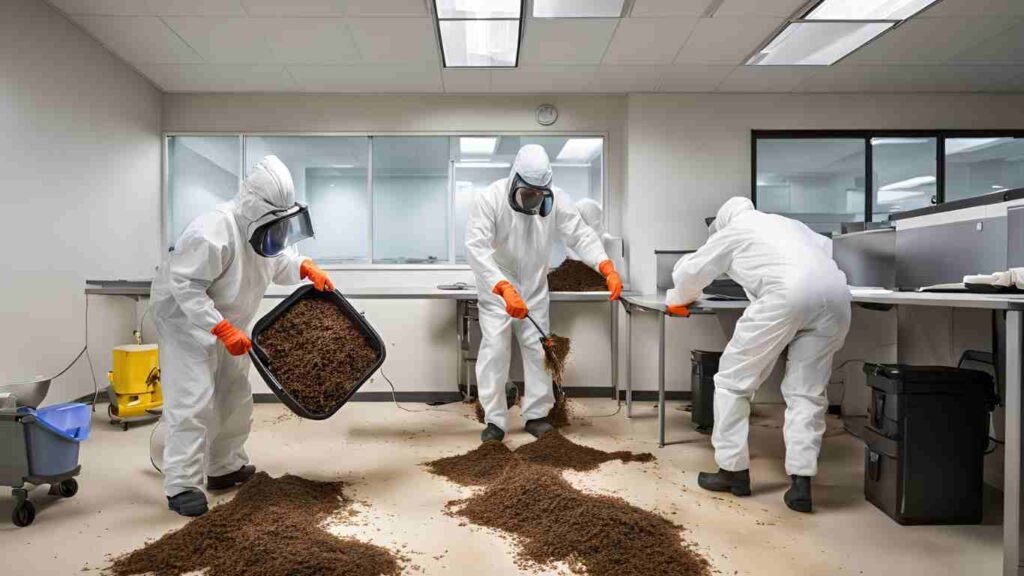
Two things set Malir Cantonment apart from the rest of the ground we treat in Karachi, and both change how we run the job. The soil is clay, not the sandy loam under most of the city, which changes the termiticide we reach for. And the address sits inside a cantonment, which changes how we get a crew to your gate. We run four to five termite jobs a month across the Malir Cantonment belt from our DHA Phase 4 office, and this page covers both halves of what makes them different — the termite control chemistry we use on clay, and how we book a treatment inside cantonment limits.
Booking a Treatment Inside the Cantonment
Reaching a house in Malir Cantonment is not the same as pulling up to a plot in a civilian scheme. Entry runs through Cantonment Board sectors with guarded access, so we arrange the visit in advance rather than arriving unannounced. In practice that means the resident confirms the appointment window with us, we share the technicians' names and CNIC details and the vehicle registration ahead of time so the crew clears the sector gate without a wait, and we hold to the agreed slot because a cantonment address does not tolerate an open-ended "sometime this afternoon." Officer housing in particular often needs the visit cleared with the resident's own security or household staff first. We are used to the process — telling us up front that the property is inside cantonment limits lets us set the paperwork up so the treatment day is not lost at the barrier.
Why Clay Soil Changes the Chemistry
The interior of Malir Cantonment — the Officer Colony, Saudabad, Quaidabad and Model Colony — sits on a heavy clay-loam left by the lower Malir basin. Clay holds water through the dry season, swells and cracks in the heat, and, the point that matters for termite work, grips soil-applied chemistry very differently from sand. Fipronil, a phenylpyrazole, binds tightly onto clay particles and stays put where it is injected, so the treated zone survives the seasonal wetting and drying that would let a more mobile active drift out of position. Imidacloprid, our default on the sandy soils elsewhere in Karachi, is more inclined to move with groundwater in this ground. On Malir clay we therefore lead with Fipronil 5 SC at 0.05% for the treated interior and keep Imidacloprid 17.8% SC for any sand-fill garden corner. Both are non-repellent — the colony walks through the barrier and carries the active home instead of detouring around it, which is why we never use repellent pyrethroids as a primary termite treatment. The protocol follows IS 6313, and the full chemistry and pricing sit on our termite control and termite treatment cost pages.
One practical consequence of clay: it accepts injected solution slowly. We drop the pour rate and give each drill point time to take the volume instead of forcing it, otherwise the solution backs up to the surface rather than soaking down into the soil-contact zone where the termite is foraging.
Older Officer Bungalows and Newer Civilian Plots
Malir Cantonment is not a single housing type. The original officer bungalows — built from the late 1970s through the 1990s — are RCC-frame with brick infill, hardwood doorframes, and parquet or wooden cabinet bases in the larger plots. That aged, seasoned timber sitting on moisture-holding clay is close to ideal conditions for Coptotermes heimi, the dominant subterranean termite here, and it is where we find most of the serious structural damage. The newer civilian plots developed on the cantonment's edge are more recent construction with younger gardens and less-established colony networks, so they lean toward pre-construction soil treatment on new builds and lighter post-construction calls. On the outer plots that back onto the remaining Malir agricultural land, re-invasion pressure runs higher because the open field beyond the boundary wall is a continuous termite reservoir — those jobs get a heavier treatment along the garden-side boundary than an interior block ever would.
How the Treatment Runs on Malir Clay
The survey covers both the plinth and the boundary wall — on outer plots the boundary facing open ground is where re-invasion starts, so we never skip it. We mark active tubes, hollow-tapping frames, frass and existing damage, then drill the inside plinth on the standard grid and inject the clay-appropriate active into the soil-contact zone, slowing the rate for the clay as above. Plumbing entries and any tree within a few metres of the structure take extra volume because those are the routes a colony uses to reach the foundation. The boundary drench is stepped up on plots facing the agricultural fringe. Every stage goes into an ISO 9001:2015 logbook — products, volumes, drill count and photographs — and we re-inspect after treatment and re-treat any new activity free inside the job. The written warranty is one year on post-construction drill-and-inject, extendable to a five-year annual maintenance contract — the sensible choice on the outer plots, where field pressure never really stops. The long eight-to-ten-year cover applies only to pre-construction proofing laid during a build.
Malir Cantonment Termite Pricing (2026)
| Plot | Scope | Indicative range (PKR) |
|---|---|---|
| 240 sq yd (Saudabad / Quaidabad) | Post-construction grid + 1-yr warranty | 20,000–30,000 |
| 500 sq yd (Officer Colony / Model Colony) | Grid + boundary drench + warranty | 35,000–54,000 |
| 1,000 sq yd (officer housing, 2 kanal) | Full grid + tree and plumbing zones + warranty | 62,000–98,000 |
| Outer plot facing agricultural land | Heavier boundary drench | +15% on base |
| Annual maintenance contract | Per visit | −20% |
Rates cover the inspection, on-site mixing, the drill-and-inject grid with Fipronil on the clay interior, the boundary drench, documentation and warranty. For the wider cost picture see our termite treatment cost and pest control prices pages.
Frequently Asked Questions
Why did you quote Fipronil when another contractor offered Imidacloprid?+
Because Malir's interior soil is clay, and Fipronil binds to clay and stays where it is injected, while Imidacloprid is more mobile in that ground. On sandy soil elsewhere in Karachi we lead with Imidacloprid; on Malir clay we lead with Fipronil. It is a soil-chemistry decision, not a price tier.
My house is inside cantonment limits — how do you handle access?+
Tell us when you book. We send the technicians' names, CNIC numbers and the vehicle registration ahead of time so the crew clears the sector gate on schedule, and we keep to the agreed window. Officer-housing visits are often cleared with your own security or staff first.
My plot backs onto the agricultural fields — does that matter?+
Yes. The open field is a continuous termite reservoir, so those plots carry higher re-invasion pressure. We treat the garden-side boundary more heavily and usually recommend the annual maintenance contract rather than a single treatment.
How long does the treatment take, and is it safe with the family at home?+
Most homes are a single day. The chemistry goes into the soil under the plinth and behind sealed drill holes, not onto indoor surfaces, so there is no airborne residue and the house is back in normal use the same day once the plugs are dry.
How fast can you reach Malir Cantonment?+
Same-day from our DHA Phase 4 office. Reach time is about 35–50 minutes outside peak hours via Sharah-e-Faisal, longer in the evening rush — another reason we fix the appointment window in advance.
Book a Malir Cantonment Termite Treatment
To schedule an inspection across Malir Cantonment, Officer Colony, Saudabad, Quaidabad, Model Colony or the outer plots facing the fields, call or WhatsApp +92-311-1101810 or email contact@nestfumigationservices.com. Tell us if the address is inside cantonment limits so we can arrange gate access ahead of time. We are open Monday to Saturday, 09:00–21:00, and work from Plot #14, 2/1 2nd Gizri Street, DHA Phase 4. ISO 9001:2015 process-certified, SPMA (Structural Pest Management Association) and PPMA registered, KCCI member, 175 verified Google reviews. Post-construction drill-and-inject carries a one-year written warranty extendable to a five-year AMC; pre-construction soil proofing carries the longer eight-to-ten-year cover.

Saad Danish is a co-founder and director of Nest Fumigation Services Private Limited, a licensed pest-control and fumigation company based in DHA Phase 4, Karachi. He oversees the company's administration, client services, and marketing, working alongside NFS's technical team to deliver residential and commercial pest management across Karachi — from termite proofing and general pest control to HACCP and Sindh Food Authority compliance programmes for food, warehouse, and industrial clients. Nest Fumigation Services is ISO 9001:2015 certified and a member of the SPMA (Sindh Pest Management Association), PPMA, and the Karachi Chamber of Commerce and Industry.
More about our team →