





Sofa cleaning cost in Karachi in mid-2026 runs roughly PKR 1,000-4,500 per seat depending on fabric, condition, and locality, with a full 3+2+1 set landing PKR 8,000-25,000. That is the direct-answer band — the rest of this page is the breakdown that explains where in the range any specific sofa lands. We run our cleaning crews out of Plot #14, 2/1 2nd Gizri Street, DHA Phase 4, and quote sofa work daily across DHA, Clifton, PECHS, Bahadurabad, Bahria Town, Nazimabad, and the industrial belts at Korangi, Malir, and SITE. The four variables that move a Karachi sofa quote are fabric (leather is the most expensive, microfibre the cheapest), condition (regular service vs heavy soil vs stain vs pet-soiled), locality (Khayaban-e-Bukhari and Boat Basin carry a real travel-and-scale multiplier), and method (encapsulation, hot-water extraction, or specialist dry-clean). We are ISO 9001:2015 certified, SPMA, PPMA and KCCI members, and sit at 175 verified Google reviews after seventeen months of trading on the current GBP. The numbers below are mid-2026 Karachi market guidance, not site-wide list prices — final quotes follow a free WhatsApp photo-walk-through.
Sofa cleaning cost in Karachi — per-seat range matrix
The fastest way to read sofa cleaning prices in Karachi is per seat by fabric. A “seat” is one cushion-and-back unit — so a three-seater is three seats, a sectional with a chaise is typically four, and a recliner armchair is one. Sofa cleaning cost karachi figures land in the bands below across the mid-2026 working market. Treat these as the baseline before locality and condition modifiers; the rest of the page explains what pushes a job up or down inside its fabric band.
- Cotton and linen blends: PKR 1,500-2,500 per seat. Hot-water extraction is the standard method. Most locally-upholstered Karachi three-seaters from Tariq Road, Khadda Market, or the Bahadurabad furniture lanes sit here.
- Microfibre and suede-look synthetics: PKR 1,000-1,800 per seat. Encapsulation is faster, uses less water, and dries inside an hour — that drives the lower per-seat figure even though the fabric itself isn’t cheaper.
- Leather (full-grain, top-grain, aniline): PKR 2,500-4,500 per seat. Distilled-water rinse, pH-neutral soap, lanolin conditioning. The aniline sub-type sits at the top of the range because the leather is unprotected and demands the most conservative chemistry.
- Velvet and chenille: PKR 2,000-3,500 per seat. Directional pile work, low-moisture shampoo, finish with a pile-lifting tool. Slower than cotton, faster than leather.
- Silk and wool blends: PKR 3,000-5,500 per seat. Cool dry-cleaning solvent, no water, no enzymatic removers. Specialist-only.
The bands above are mid-2026 Karachi market guidance pulled from active jobs and shadow quotes across the city. The next four sections explain the four levers — fabric, condition, locality, method — that move any specific sofa inside or outside its baseline range.
What drives sofa cleaning cost in Karachi — the four-factor model
Every sofa cleaning services quote we issue across Karachi is shaped by four things: fabric, condition, locality, and method. Two of them (fabric and method) are technical decisions the operator makes; two (condition and locality) are facts about the job we cannot change. Reading these in advance is the difference between a confident quote and an expensive surprise.
1. Fabric. Fabric is the largest single driver of sofa cleaning prices in Karachi because it dictates both chemistry and method. Leather can’t take water saturation, silk can’t take alkaline chemistry, cotton can take both but needs a post-rinse to stop re-soiling, microfibre needs encapsulation polymer not extraction. The fabric category sets the per-seat band; everything else nudges within it.
2. Condition. A sofa cleaned every nine months on a regular schedule is a baseline-priced job. The same sofa untouched for five years, with visible food and oil staining at the armrests and a five-year micro-organism load in the cushion seams, is a 30-50% surcharge over baseline. Stain-specific spot work — red wine, ink, biro, blood — is an add-on of PKR 500-1,500 per stain. Pet-soiled sofas (cat urine in particular) need enzymatic treatment plus odour neutralisation and sit at the top of every band.
3. Locality. Karachi has real cost-to-serve variation across postcodes. A Khayaban-e-Bukhari Phase 8 villa with a full L-shaped Italian leather sectional in a 28-foot drawing room is a different job from a 2-bed Bahadurabad flat with a single cotton three-seater, even before chemistry is mixed. Travel time, vehicle-park access, the size of the sets being quoted, and the standard scope of jobs in that locality all compound. We break locality multipliers out in their own section below.
4. Method. Three methods cover the Karachi sofa market — encapsulation (low-water polymer crystallisation, vacuum-extracted), hot-water extraction (60-70°C extraction wand with pre-spray and post-rinse), and dry-cleaning (cool solvent on cloth, no water). Each method has a different per-hour cost structure and a different fabric fit. Picking the wrong method is what causes the tide-marks, mineral haze, and three-week re-soiling cycles that customers blame on cheap quotes when the underlying error was method choice, not corner-cutting.
A 3+2+1 cotton set in PECHS in regular condition is the simplest possible quote — flat baseline, no multipliers. A pet-soiled aniline leather sectional in Khayaban-e-Bukhari is the opposite — top-of-band fabric, condition surcharge, locality multiplier, and specialist method all stacking.
Fabric-by-fabric cost explainer — why each band looks the way it does
The five fabric bands above aren’t arbitrary — each reflects specific chemistry, water, labour, and equipment costs.
Leather is the most expensive fabric for a reason. A correct leather clean uses pH-neutral soap (6.5-7.5) applied on a damp microfibre in small sections, rinsed with distilled water — never mains. Karachi mains run 250-350 ppm CaCO3, and that hardness leaves a chalky mineral haze on dark leather visible within days. After cleaning, the hide needs a lanolin-based cream conditioner to replace natural oils stripped during the wash. Chemistry cost per seat is roughly 2-3× a cotton seat (specialist conditioner is the line item), and labour time per seat is closer to 35-45 minutes versus 20-25 for cotton. That stacks into the PKR 2,500-4,500 band.
Microfibre is the cheapest because the method is fast. Microfibre’s dense weave traps moisture, so hot-water extraction is the wrong tool — it leaves the sofa damp for hours and risks re-soiling. The right tool is encapsulation: a low-moisture polymer that crystallises around soil particles and brushes out with a HEPA vacuum. Total moisture content stays under 5%, surface dry inside 60 minutes, and per-seat labour drops to 15-20 minutes. The chemistry is also cheaper. Net result: PKR 1,000-1,800.
Silk and wool blends are specialist because water is forbidden. Natural protein fibres (silk and wool) are damaged by alkalinity and by enzymes — the standard pre-spray chemistries used on cotton would strip dye and fray the weave. The only correct method is a cool dry-cleaning solvent applied on cloth, never as a saturation wash. The solvent itself is expensive, the technician needs specialist training, and the per-seat time is closer to 45-60 minutes. That’s how the PKR 3,000-5,500 band lands. These are heirloom-grade sofas — they’re not in the catalogue of an operator quoting PKR 800 per seat for “any fabric”.
Velvet and chenille sit mid-band because the pile is directional. Brushing velvet against the nap leaves visible drag marks the homeowner sees for months. The correct method is a low-moisture shampoo applied along the pile direction, then finished with a pile-lifting tool to restore the nap. Hot steam — a tempting shortcut — permanently flattens velvet. The work is slower than cotton but doesn’t need the conditioner step that leather needs. That places velvet at PKR 2,000-3,500.
Cotton and linen are the baseline. Hot-water extraction at 60-70°C, alkaline pre-spray at pH 8.5-10 to break the lipid bond on cooking-oil residue, then a mildly acidic post-rinse at pH 5.5-6 to leave the fabric chemically neutral. The post-rinse is the most-skipped step in Karachi sofa cleaning — leaving the alkaline residue behind is what causes the three-week re-soiling cycle customers complain about. A correct cotton seat takes 20-25 minutes of technician time and a few hundred millilitres of chemistry, landing PKR 1,500-2,500.
Condition surcharges — regular vs heavy soil vs stain vs pet
Condition is the surcharge layer that sits on top of every fabric band. The per-seat figures above assume a regularly-used sofa in normal condition — vacuumed weekly, no visible staining, no pet residency, no five-year backlog. Karachi reality is usually somewhere different, and these are the bands we apply.
Regular service. Baseline rate, no surcharge. This is the sofa cleaned every six to nine months on a household schedule. Surface soil only, no embedded grime, no biological load. The job is straightforward — pre-treat, extract or encapsulate, dry. Per-seat time stays at the lower end of each fabric band.
Heavy soil — five-plus years uncleaned. +30-50% over baseline. This is the sofa where the cushions have visible discolouration on the seat surface, the armrests carry an oil-darkened patch from forearm contact, the back-cushion seams hold compressed dust, and the foam has a five-year micro-organism load. The first pre-spray comes back almost black in the recovery tank. A heavy-soil sofa typically needs two pre-spray passes and a longer dwell — 12-15 minutes versus the standard 5-7 — before extraction. That’s where the surcharge comes from.
Specific stain treatment. +PKR 500-1,500 per stain. Red wine, ink, biro, blood, curry, and turmeric are the common Karachi stains we surcharge for individually. Each stain category has a specific chemistry — protein-based (blood) needs enzymatic; tannin-based (wine, tea) needs a tannin lifter; dye-based (biro, ink) needs a solvent. The surcharge covers chemistry and the additional dwell-and-blot cycles, typically 15-20 minutes per stain.
Pet-soiled — cat urine, dog accidents. +50-80% over baseline. This is the heaviest condition surcharge because the work is genuinely different. Cat urine in particular crystallises in the foam and re-activates with humidity — surface cleaning does nothing. The correct treatment is an enzymatic digester applied to the foam through the fabric (penetrating the urine deposit), 30-45 minutes dwell, followed by an odour-neutralising oxidiser and a final extraction. Done right, the smell is gone permanently. Done as a surface clean, it returns the first humid day.
Mould and mildew remediation. +PKR 1,500-3,000 per seat. Karachi’s eight-month AC season plus shaded drawing rooms creates a recurring mildew load on cushion undersides and foam-fabric seams — especially in older Phase 1-4 villas with low air-exchange units. Surface cleaning lifts the visible film but not the biological load. Remediation adds a post-extraction sanitisation pass — benzalkonium chloride at 0.06% or quaternary ammonium at 200 ppm, five-minute dwell. Biocide-level, not deodorant.
Locality multipliers across Karachi — DHA, Clifton, PECHS, Bahria, Korangi
Locality multipliers reflect real cost-to-serve variation across the city — travel time, set size, access constraints, route economics. Not postcode-tax pricing for its own sake. Four bands cover Karachi.
DHA Phase 5, 6, 8 and Clifton Boat Basin: +20-40%. Khayaban-e-Bukhari, Khayaban-e-Shaheen, the Phase 8 boundary blocks, and Boat Basin sit at the top of the multiplier band for three converging reasons. Travel time from our Phase 4 office is longer than every locality reads on the map — DHA traffic in the evening window adds 25-40 minutes one-way. Sofa sets in these zones are typically larger (L-shaped sectionals, matching armchair sets, 28-foot drawing rooms with two sofas), so the per-visit chemistry and labour scale up. Many jobs also include leather as the dominant fabric, pulling per-seat baseline to the top of its band. Net real-world multiplier: 20-40% over baseline. Our DHA-specific sofa cleaning page covers the phase-by-phase protocol in more detail.
DHA Phase 1-4 and Clifton Kehkashan: +10-25%. Closer to our office, smaller-average set sizes, but still drawing-room-grade work most of the time. Phase 1-2 in particular skews toward older, formal sets — silk-blend and velvet are common, both of which pull the per-seat figure up regardless of locality. Phase 4 villas typically have heavy AC-season biofilm, which often triggers the mould remediation surcharge in older units.
PECHS, Bahadurabad, Bahria Town, North Nazimabad: baseline. No multiplier. Standard cotton-linen and microfibre mix, mid-size three-seater sets, predictable access. Bahria Town is the geographic outlier — 50 km from Phase 4 — so a flat PKR 800 fuel surcharge per visit is disclosed in the quote, but the per-seat rate is baseline. PECHS and Bahadurabad are the easiest jobs we run logistically.
Korangi, Malir, SITE, Gulistan-e-Jauhar: -5-10% on scheduled days. Distance from the Phase 4 office is meaningful, but we discount these routes when we can batch them into scheduled neighbourhood days — typically Wednesdays for Korangi and Saturdays for Gulistan-e-Jauhar. Sofa carpet cleaning combination bookings get an additional bundle discount. Same-day calls in these areas don’t get the route discount because the truck cost can’t be amortised.
Method affects cost — encapsulation vs hot-water extraction vs dry-cleaning
Method choice is invisible to the customer at booking but determines roughly 30% of the per-seat cost. The three Karachi-relevant methods price differently, take different equipment, and fit different fabrics.
Encapsulation: PKR 1,000-1,800 per seat. Low-moisture polymer crystallisation. The polymer surrounds soil particles, dries, and vacuums out clean. Fast — 15-20 minutes per seat. Dries inside 60 minutes. Best fit: microfibre, suede-look synthetics, low-pile fabric where deep extraction is overkill. Not suitable for heavy soil — the polymer can’t lift five years of embedded grime in a single pass.
Hot-water extraction (steam): PKR 1,500-2,500 per seat. The workhorse of professional sofa cleaning in Karachi. Pre-spray at 60-70°C, alkaline emulsifier dwell, high-pressure extraction wand, mildly acidic post-rinse. Lifts embedded soil that encapsulation can’t reach. Per-seat time 20-25 minutes. Dries inside 4-6 hours in Karachi summer conditions. Best fit: cotton, linen, mixed-blend upholstery. Wrong fit: leather, silk, wool, velvet.
Dry-cleaning (solvent): PKR 3,000-5,500 per seat. Cool dry-cleaning solvent on cloth — no water, no heat. The solvent itself costs more per litre than any water-based chemistry we use, and the technician needs specialist training. Per-seat time 45-60 minutes. Best fit: silk-blend, wool-blend, heat-sensitive imported fabric. Most operators in Karachi don’t offer this — it’s the line item that separates a generalist crew from one that can clean an heirloom drawing-room set.
An eco sofa cleaning request — common from households with infants or chemically-sensitive residents — defaults to encapsulation with plant-derived polymer chemistry, no fragrances, no biocides. Per-seat cost matches the standard encapsulation band.
Full sofa set pricing — what a 3+2+1 actually costs in Karachi 2026
Most Karachi homeowners think in sets — the standard 3+2+1 (three-seater, two-seater, single armchair) is what we quote most often. Here is what the full set lands at before locality and condition modifiers.
- 3+2+1 cotton or linen set: PKR 8,000-15,000. Six seats at the cotton baseline of PKR 1,500-2,500 per seat, with a small set discount applied because the technician’s mobilisation cost is shared across the three pieces.
- 3+2+1 microfibre set: PKR 6,500-12,000. Six seats at the microfibre rate of PKR 1,000-1,800 per seat. Fastest job in the catalogue — a four-hour visit start-to-finish in most homes.
- 3+2+1 leather set: PKR 15,000-25,000. Six seats at PKR 2,500-4,500 per seat. The most common set in DHA Phase 5-8 drawing rooms, and the upper end of the range is where a Khayaban-e-Bukhari L-shaped Italian sectional with the locality multiplier lands.
- 3+2+1 velvet or chenille formal set: PKR 12,000-21,000. Slower per-seat work plus the pile-lifting finish step. Common in Phase 1-2 formal drawing rooms.
- Mixed-fabric set: itemised quote. Many Karachi households have a cotton family-room set and a leather drawing-room set quoted together — we itemise per piece rather than blending, so the customer sees what each section costs.
L-shaped sectionals don’t fit 3+2+1 grammar. We count seats — a typical L-shaped leather sectional with a chaise is five or six seats and lands PKR 12,500-27,000 standalone. A modular corner unit with a separate ottoman is usually four seats plus the ottoman at PKR 1,000-1,800.
Common add-ons — Scotchgard, odour neutralisation, carpet bundles
Three add-ons account for almost every line item beyond the base sofa quote in Karachi. We surface them at quote time so customers can choose, rather than slipping them onto the invoice.
Scotchgard or equivalent fabric protector: +PKR 2,000-3,500 for a full 3+2+1 set. A post-clean fluoropolymer treatment that makes the fabric water-resistant and stain-resistant for roughly 12-18 months. Most useful on light-coloured cotton and linen in households with young children or frequent guests — the spilled tea bead rolls off rather than soaking in. Not used on leather (it has its own conditioner) or silk (the solvent system is incompatible).
Odour neutralisation: +PKR 1,500-2,500 per set. Not a fragrance — an oxidising treatment that breaks down odour molecules at source. Used routinely on pet-soiled sofas (part of the pet-soil surcharge), and on heavy-smoking households, and on sofas pulled out of storage with a musty load. The output is a neutral-smelling sofa, not a perfumed one.
Carpet add-on with sofa booking: bundle discount of 10-15%. Booking carpet cleaning together with sofa cleaning in the same visit saves the second mobilisation fee. The discount applies when both jobs are scheduled the same day at the same address — typically the same technician handles both, the truck-mount equipment is already on site, and the route cost amortises. A 3+2+1 cotton set plus a 10×12 living-room carpet booked together is the most common bundle we quote in PECHS and Bahadurabad.
Why sofa cleaning prices vary between Karachi operators
Why does the same 3+2+1 cotton set quote at PKR 4,500 from one operator and PKR 12,000 from another? Both quotes describe genuinely different services. Here is what gets skipped at the low end.
The post-rinse step. A correct cotton or linen extraction uses an alkaline pre-spray to break the lipid bond on embedded grime, then a mildly acidic post-rinse to leave the fabric at chemical neutrality. The post-rinse takes an extra five minutes per seat and a measured volume of acidic rinse chemistry. Skipping it leaves alkaline residue in the fabric, which acts as a soil magnet — the customer’s sofa looks clean on Day 1 and re-soils visibly inside three weeks. That’s how a PKR 500-per-seat quote stays profitable for the operator.
Hard-water rinse on leather. Karachi mains run 250-350 ppm CaCO3. A leather sofa rinsed in mains water shows a chalky mineral haze on dark surfaces within days — the calcium and magnesium ions deposit on the hide as the water dries. Distilled water for the rinse step costs roughly PKR 80-120 per litre versus zero for the tap, and a leather seat takes about 1-1.5 litres of rinse water. Multiply across a six-seat set and that’s PKR 600-1,100 of distilled water alone — gone if the operator uses the kitchen tap.
Chelating agents for hard water. Even on cotton, the standard pre-spray needs a chelating agent (EDTA or sodium citrate) at working dilution to sequester the hardness ions in DHA mains. Without it, the surfactant binds to calcium instead of soil, drops its cleaning power, and leaves a faint mineral haze. The chelating agent costs almost nothing per seat — but a cheap operator simply doesn’t carry it.
pH-correct chemistry on leather. A pH-neutral (6.5-7.5) leather soap costs roughly 3-4× what an all-purpose alkaline cleaner costs per litre. Operators quoting PKR 600 per leather seat are almost always using the alkaline cleaner — which strips the leather’s natural oils and visibly cracks the surface within twelve months. The damage is invisible at handover, decisive at month four.
The PKR 1,500-per-seat cotton seat at our rate includes the post-rinse, the chelating agent, the correct chemistry, and a follow-up call if the customer sees re-soiling inside the warranty window. The PKR 500 seat doesn’t include any of that. They are not the same product.
How to get an accurate sofa cleaning quote from us
Phone walk-through (±20% accuracy). A five-minute call where we ask about fabric, set configuration, condition, locality, and any visible stains or pet history. Useful when the customer wants a sanity-check number before deciding to book. Most cotton and microfibre jobs land inside the ±20% band from a phone description.
WhatsApp photo-quote (±10% accuracy). Two or three photos per piece — full sofa view, close-up of any stains, fabric texture close-up — sent to +92-311-1101810 with the locality. We quote in writing within an hour during working time. This is what most customers use, and it’s the most accurate quote we can give without sending a technician.
On-site assessment (final quote). Free for residential jobs we expect to exceed PKR 15,000, and standard for all commercial sofa cleaning work. A technician visits, identifies fabric and condition zone-by-zone, and hands over a written estimate before any work starts. Useful when the household has a mixed-fabric set, an heirloom piece, or visible damage that needs assessment.
Whichever route a customer takes, the written quote is itemised by piece, by method, and by add-on — so the line items are clear and the customer can opt in or out of specific add-ons (the Scotchgard finish, the carpet bundle, the dust-mite treatment) without renegotiating the base. To start a quote: WhatsApp +92-311-1101810, email contact@nestfumigationservices.com, or visit our office at Plot #14, 2/1 2nd Gizri Street, DHA Phase 4. Mon-Sat 09:30-20:00.
Why Karachi families choose us for sofa cleaning services near me
The proof bridge on this page is short because the operating record speaks for itself. We have run cleaning crews out of DHA Phase 4 for seventeen months, sit at 175 verified Google reviews on the current GBP, hold ISO 9001:2015 certification, and are members of SPMA, PPMA, and KCCI. Sofa cleaning sits inside our broader cleaning services Karachi hub — same chemistry standards, same protocols, same warranty pattern across sofa, carpet, mattress, curtain, and full-house deep-clean work.
Three things customers in DHA, Clifton, PECHS, and Bahadurabad routinely mention in reviews about our sofa work. First, the written itemised quote — line by line, before the technician unloads any equipment. Second, the post-rinse step on cotton and linen sofas, because the customer can see the technician switch tanks for the acidic post-rinse pass (most operators don’t do this). Third, the distilled-water rinse on leather, because the bottles arrive on the truck and get used in front of the customer rather than tap water from the kitchen.
For sofa carpet cleaning combinations on the same day, the route economics improve and the bundle discount is real — typically 10-15% on the second service when both ride one mobilisation.
FAQ — sofa cleaning cost in Karachi
How much does sofa cleaning cost in Karachi?
Sofa cleaning cost in Karachi in mid-2026 runs PKR 1,000-4,500 per seat depending on fabric, with microfibre at the bottom (PKR 1,000-1,800), cotton and linen at PKR 1,500-2,500, velvet at PKR 2,000-3,500, leather at PKR 2,500-4,500, and silk or wool blends at PKR 3,000-5,500 because they need specialist dry-cleaning. Locality, condition, and method modifiers move quotes inside or outside these bands by 10-50%.
What is the average price for cleaning a 3+2+1 sofa set?
A standard 3+2+1 cotton or linen sofa set in Karachi cleans for PKR 8,000-15,000 in mid-2026. The same set in leather costs PKR 15,000-25,000 because the chemistry, distilled-water rinse, and lanolin conditioning step add cost per seat. Microfibre 3+2+1 sets land lower at PKR 6,500-12,000 because encapsulation is faster than hot-water extraction. A set discount applies across the three pieces compared to single-piece pricing.
Why is leather sofa cleaning more expensive than fabric?
Leather sofa cleaning costs more per seat because the chemistry, water, and labour are all more specialised. Leather needs a pH-neutral soap (6.5-7.5), a distilled-water rinse (Karachi mains hardness at 250-350 ppm CaCO3 leaves chalky residue on dark leather), and a lanolin-based conditioner to replace natural oils stripped during the wash. Per-seat labour is 35-45 minutes versus 20-25 for cotton. The specialist conditioner is the largest single line-item difference.
Are sofa cleaning rates higher in DHA and Clifton?
Yes, by 10-40% depending on the specific block. DHA Phases 5, 6, 8 and Clifton Boat Basin carry the highest multiplier (20-40%) because travel time is longer, sofa sets are typically larger, and leather is more dominant in the fabric mix. DHA Phases 1-4 and Clifton Kehkashan sit at 10-25%. PECHS, Bahadurabad, and Bahria Town are baseline. Korangi, Malir, and Gulistan-e-Jauhar can run 5-10% below baseline on scheduled-day bookings.
Do you charge extra for stain or pet-odour treatment?
Yes, both are itemised add-ons. Specific stain treatment (red wine, ink, biro, blood, curry, turmeric) is PKR 500-1,500 per stain, depending on chemistry and dwell time required. Pet-soiled sofas — cat urine in particular — carry a 50-80% surcharge over the base per-seat rate because the work requires enzymatic digestion through the fabric into the foam, 30-45 minute dwell, and a final odour-neutralising oxidiser pass. Done correctly, the odour is gone permanently rather than masked.
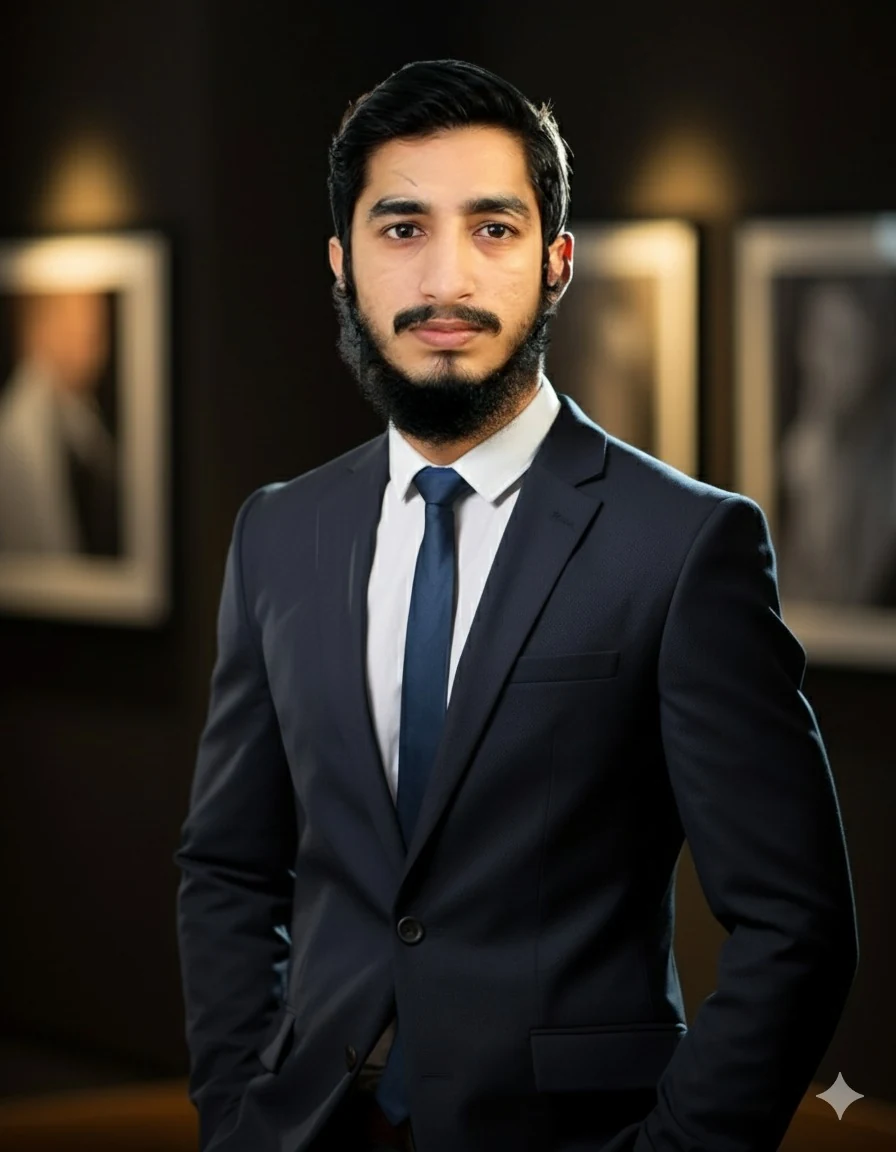
Saad Danish is a co-founder and director of Nest Fumigation Services Private Limited, a licensed pest-control and fumigation company based in DHA Phase 4, Karachi. He oversees the company's administration, client services, and marketing, working alongside NFS's technical team to deliver residential and commercial pest management across Karachi — from termite proofing and general pest control to HACCP and Sindh Food Authority compliance programmes for food, warehouse, and industrial clients. Nest Fumigation Services is ISO 9001:2015 certified and a member of the SPMA (Sindh Pest Management Association), PPMA, and the Karachi Chamber of Commerce and Industry.
More about our team →