







In most Karachi neighbourhoods the person who owns the sofa also bought it, and can tell you what went into it. In Gulistan-e-Jauhar that is often not true. Between the University Road corridor, the Karachi University and NED catchment, and the volume of rented flats across Blocks 1 to 19, a large share of the sofas we are called to came with the flat, were bought second-hand, or were inherited from the previous tenant. The owner has no idea what is in the fabric. That changes the whole approach: you cannot treat a stain by its history when nobody knows the history, so you identify it by its chemistry, on site, before choosing a product. Get that wrong and the standard process sets the mark permanently instead of removing it. This page sits alongside our Karachi-wide sofa cleaning service.
Unknown provenance: why we identify stains by class, not by story
A cleaner working from the customer’s account — “I think the last tenant spilled something” — is guessing. We sort every visible mark into a chemical class instead, by how it looks, feels and responds to a controlled test on a small area. Four classes matter, and two of them are actively damaged by the default upholstery process.
Protein soils, and why heat is the enemy. Milk, egg, blood, sweat, dairy-based curries, baby formula. Proteins denature and coagulate with heat, and once coagulated they bond to the fibre and become effectively permanent. This is the important one, because the industry default is hot water extraction at 60 to 70°C, and running that over an unidentified protein stain sets it the way heat sets egg white in a pan. Protein needs a protease enzyme pre-treatment at cool-to-warm temperature with a long dwell — twenty minutes or more — before any heat comes near the panel. On a sofa of unknown history, darkening at the headrest or arm cap is very often protein.
Tannin soils, and why alkaline pre-spray is the enemy. Chai, coffee, soft drinks, fruit juice. Tannins are set by alkalinity, and the standard upholstery pre-spray sits at around pH 9 to 9.5. Spray that over a chai ring, and in a Jauhar student or family flat, chai rings are the most common mark we see, and you lock the stain in. Tannin needs an acidic tannin remover, working in the opposite direction to the general pre-spray. So we treat identified tannin spots first and separately, rinse, and only then bring the alkaline pre-spray near the panel.
Oil and grease soils — body oil at the headrest and arms, hair oil, cosmetic residue — are the class the alkaline pre-spray is genuinely designed for, responding to surfactant chemistry with 10 to 15 minutes of dwell.
Dye and pigment soils. Ink, marker, mehndi, hair colour. These are not soil sitting on the fibre; the colourant has bonded with or dyed it. Some lift with a controlled reducing or oxidising agent, many do not, and aggressive attempts frequently strip the fabric’s own dye and leave a pale patch worse than the mark. We test, give you the realistic odds before starting, and on an old mark will often recommend leaving it alone.
Budget three-piece suites and low-density foam
Low-density foam behaves like a sponge, not a cushion. A suite bought to furnish a let, or second-hand by a student household, is built to a price, and the place the price comes out is the foam. Cheap open-cell polyurethane has a high proportion of open, interconnected cells, so it takes on water freely and holds it. A dense block sheds most of what an extraction pass puts in; a low-density block absorbs it into the core. The wet vacuum pass then compresses that saturated block, and foam compressed while wet does not fully recover — the cushion comes out flatter than it went in, and the owner reasonably concludes the cleaning damaged the sofa. It did.
So on a thin-foam suite we deliberately use less water and more passes. Low-moisture encapsulation, or extraction at reduced solution flow with multiple dry-recovery passes, rather than one heavy wet pass followed by a long dry. It takes longer on site and it is the same price. You can check the foam yourself: press a cushion firmly with your thumb and let go. Foam that recovers slowly, or holds a visible dent for a second or two, is low density and should not be soaked.
And the honest part. Some second-hand suites are past the point where cleaning is worth the money. If the cushion bottoms out when you sit, or the seat has a permanent trough, a clean will make the fabric look better for a few weeks and fix none of the reasons the sofa is uncomfortable. On a low-value set, re-foaming costs less than cleaning it twice, and we will tell you that from your photos rather than after we have arrived and taken the booking.
Reading the fabric code before choosing chemistry
Every job starts at the upholstery tag. On second-hand and landlord-supplied furniture the tag is usually long gone, so we run a fibre burn test on a hidden thread and a colourfastness test on a concealed panel instead.
W-coded (water-safe) covers most polyester, microfibre and cotton blends, the bulk of Jauhar lounge furniture; these take encapsulation or extraction, with foam density often deciding which. S-coded (solvent-only) means rayon, viscose, the imported velvets and some silk blends — dry solvent only, because water causes shrinkage, watermarking and pile distortion that cannot be reversed, and a second-hand S-coded sofa has often already been water-cleaned once by somebody who did not check.
WS-coded permits either process, so we choose on soil type — solvent for oily marks, water-based for general body soil. X-coded is vacuum and dry-brush only; rare, but it exists on some decorative pieces, and putting any liquid on one cannot be undone.
Our 6-step protocol in a Jauhar flat
Step 1 — Inspection, code check, foam check and damage record. Fabric code or burn test, colourfastness on a concealed panel, a thumb-press foam density check, and photographs of every existing tear, burn, watermark and collapsed cushion before we touch anything. On rented furniture this separates what was already there from anything that happens on our watch, which matters when a security deposit is in play.
Step 2. Dry soil removal. High-suction vacuum with crevice tool through the seat crevices, under the cushions, along the deck and into the skirt. On a sofa with unknown previous occupants this stage also tells us a lot: what comes out of the crevices is the first honest account of how the furniture has been used.
Step 3. Stain classification and separate spot pre-treatment. This is the step that expands in Jauhar. Marks are sorted into protein, tannin, oil and dye classes and pre-treated individually and in the right order — protease enzyme at cool temperature on protein, acidic tannin remover on chai and coffee, solvent or surfactant on oil — before any general pre-spray goes near them. Doing this after the alkaline pre-spray, the ordinary sequence, is how tannin and protein marks get set permanently.
Step 4. General pre-spray and dwell. Alkaline pre-spray at roughly pH 9 to 9.5 across the body-oil soiling, 10 to 15 minutes of dwell. Surfactants need contact time to break the soil-to-fibre bond; agitating immediately just moves soil around.
Step 5 — Encapsulation, controlled extraction or dry solvent, plus neutralising rinse. Encapsulation lays a polymer that crystallises around each soil particle as it dries so the crystals vacuum away, at a fraction of the moisture — our usual answer on low-density foam. Extraction at 60 to 70°C is used on sound, higher-density foam where soil is genuinely embedded, and never over an untreated protein mark. An acidic rinse then returns the fabric to pH 5.5 to 6.5, because alkaline residue is sticky and pulls fresh soil in fast.
Step 6 — Grooming, drying and optional protector. Pile groomed in one direction, air movers positioned, and where the flat has no cross-ventilation we ask you to run the air conditioning rather than open a window onto humid air. A protector does not make a sofa stain-proof; it buys you time to blot a spill — worth more in a shared or rented flat than almost anywhere else.
Second-hand furniture and bed bugs: the thing cleaning does not solve
Second-hand upholstery is the most common way a bed bug population enters a household, and Jauhar’s rental churn makes that a live risk here rather than a theoretical one. The species dominant in Karachi is the tropical bed bug, Cimex hemipterus [1], and its harbourage is not really the fabric surface at all — it is the seams, the underside webbing, the joints of the timber frame and the void behind the dust cover, where the insects sit tight between feeds.
Hot water extraction at 60 to 70°C kills bed bugs and eggs where the solution physically reaches, so a clean does knock back what is living in the accessible upholstery. It does not reach a frame joint or the inside of a dust cover, and the eggs are cemented to the substrate rather than sitting loose. So a clean can reduce a population and will not eliminate it, and a partially treated population disperses further into the room. If anyone is waking with bites in a line, or you have found dark faecal spotting along the seams, do not book a sofa clean and hope. Book pest control in Gulistan-e-Jauhar, which treats the harbourage properly, and clean the upholstery afterwards. We say this knowing it moves the customer off the booking they came for.
On dust mites, an enclosed Jauhar flat is good habitat. Dermatophagoides house dust mites thrive at the humidity a closed lounge holds through summer, and it is the mite faecal protein rather than the mite that drives the allergic response. Extraction flushes the accumulated allergen load, and we recommend pairing it with mattress cleaning because the mattress carries a far larger reservoir than the sofa.
Gulistan-e-Jauhar pricing
Priced per seat, by fabric type and soil level. The published bands are identical to DHA, Clifton, PECHS and Gulshan — no locality premium and no fuel surcharge on Gulistan-e-Jauhar. The extra spot-testing an unknown-history sofa needs sits inside the normal rate.
Encapsulation (microfibre and low-soil W-coded, and our default on low-density foam): PKR 1,000-1,800 per seat.
Hot water extraction (cotton, linen, standard W-coded): PKR 1,500-2,500 per seat.
Velvet: PKR 2,000-3,500 per seat.
Leather: PKR 2,500-4,500 per seat.
Dry-clean solvent (silk, wool, S-coded): PKR 3,000-5,500 per seat.
Typical 3+2+1 set: PKR 6,500-12,000 in microfibre, PKR 8,000-15,000 in cotton, PKR 12,000-21,000 in velvet, PKR 15,000-25,000 in leather.
Surcharges: individual stain treatment PKR 500-1,500 per stain; mould or mildew remediation PKR 1,500-3,000 per seat. Bundling with curtain and blinds cleaning, carpet cleaning or a room deep clean reduces the combined job, and a move-in or move-out job is usually better handled as a full house deep clean in one visit. Full per-fabric bands are on our sofa cleaning cost guide.
Booking, and what happens on the day
WhatsApp +92-311-1101810 with photos — one wide shot, one close-up of each individual mark you want treated, and one of the fabric tag if it is still attached. The close-ups matter most here: they let us classify most stains before anyone travels and give you a realistic answer on which will lift and which will not. Send the seat count, your block number and floor, and whether the lift is working. Price band and slot confirmed inside 30 minutes, Mon-Sat 09:30-20:00. Jauhar is roughly 30 to 40 minutes from our Phase 4 office depending on University Road and Rashid Minhas traffic.
A two-person team arrives with a compact extraction unit, encapsulation kit, dry solvent system, enzyme and tannin spotters, a vacuum with crevice tools, pre-sprays, neutralising rinse, air movers and PPE. Clear small and fragile items from around the sofa; we move the furniture itself. Expect two to three hours for a five to seven seat set. Touch-dry is 2 to 4 hours after encapsulation and 6 to 12 after extraction in a closed flat — run the AC rather than opening windows. Before-and-after photos go to you on WhatsApp.
Gulistan-e-Jauhar questions
Which Jauhar blocks do you cover?
Block 1 through Block 19, plus Perfume Chowk, Kamran Chowrangi, Munawwar Chowrangi, Safoora and the University Road and Rashid Minhas corridors, at identical rates with no surcharge. Typically 30 to 40 minutes from our Phase 4 office. Same-day is usually available for morning bookings, and we can often fit two flats in the same building into a single visit — worth coordinating with a neighbour.
Why can’t you just steam-clean the whole thing?
Because heat sets protein and alkaline pre-spray sets tannin, and on a sofa whose history nobody knows you cannot assume you are free of either. Running 60 to 70°C solution over an unidentified milk, sweat or blood mark coagulates the protein into the fibre and makes it permanent. Chai and coffee rings do the same in reverse under an alkaline spray. The classification step exists so we do not turn a removable mark into a permanent one. Fuller comparison on our steam vs shampoo page.
Our sofa is a cheap second-hand set. Is it worth cleaning?
If the fabric is sound and the foam still recovers when you press it, yes, and we use a low-moisture method so the foam survives it. If the cushions bottom out when you sit, or there is a permanent trough in the seat, then no. Cleaning will improve the look for a few weeks and fix none of the reasons the sofa is uncomfortable, and re-foaming will cost less than two cleans. Send photos and we will give you a straight answer before you spend anything.
We have bites and we bought the sofa second-hand. Will cleaning help?
Not enough to rely on. Hot water extraction kills bed bugs and eggs where the solution physically reaches, but Cimex hemipterus harbours in frame joints, seams and behind the dust cover where it does not reach, and the eggs are cemented in place. A partial knockdown also pushes the population out into the rest of the room. Book pest control first so the harbourage is treated properly, then clean the upholstery afterwards. It is not the booking we would prefer to take, but it is the one that solves the problem.
There is no lift, and is this safe for children and asthma sufferers?
No lift is not a problem — our flat kit is portable by design, carried up rather than truck-mounted gear that stays at street level. Tell us the floor at booking so the team loads accordingly; it does not change the price. On safety: the pre-sprays, enzyme spotters and encapsulation polymers are standard upholstery-grade products, and the neutralising rinse exists so nothing alkaline is left where people sit. For allergy households we recommend extraction at 60-70°C where foam and fabric allow, because the benefit is flushing out dust-mite allergen rather than anything we leave behind. Keep children and pets off until properly dry.
Book sofa cleaning across Gulistan-e-Jauhar Block 1-19
WhatsApp or call +92-311-1101810, or email contact@nestfumigationservices.com. We cover Gulistan-e-Jauhar Block 1-19, Perfume Chowk, Kamran Chowrangi, Munawwar Chowrangi, Safoora and the University Road corridor from our office at 73-C, 9th Commercial Street, DHA Phase 4, Karachi 75500, Mon-Sat 09:30-20:00. ISO 9001:2015 certified; members of KCCI, SPMA and PPMA. See also our Karachi-wide sofa cleaning service, upholstery cleaning for chairs and dining sets, carpet cleaning, and pest control in Gulistan-e-Jauhar.
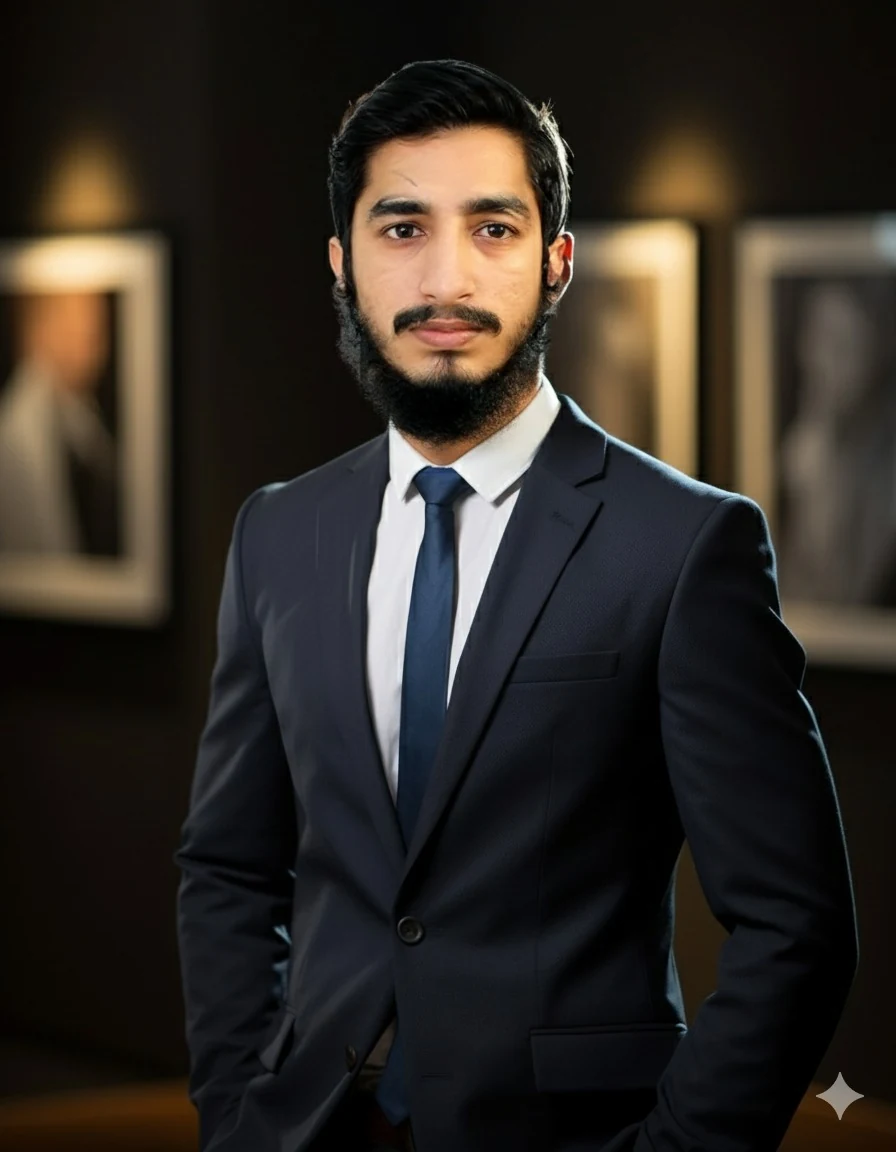
Saad Danish is a co-founder and director of Nest Fumigation Services Private Limited, a licensed pest-control and fumigation company based in DHA Phase 4, Karachi. He oversees the company's administration, client services, and marketing, working alongside NFS's technical team to deliver residential and commercial pest management across Karachi — from termite proofing and general pest control to HACCP and Sindh Food Authority compliance programmes for food, warehouse, and industrial clients. Nest Fumigation Services is ISO 9001:2015 certified and a member of the SPMA (Sindh Pest Management Association), PPMA, and the Karachi Chamber of Commerce and Industry.
More about our team →