Cleaning a sofa in a Gulshan flat is a different job from cleaning one in a bungalow, and the difference is not the fabric — it is the drying. A DHA villa has a lawn, a covered terrace and cross-ventilation. A third-floor flat in Block 6 has a sealed lounge, one window facing an internal shaft, and no outdoor space to move a wet three-seater onto. Get the method wrong in that setting and you hand the customer a damp sofa in Karachi humidity, which smells worse on day three than it did before you arrived. So in Gulshan we lead with encapsulation far more often than with hot water extraction, and we say why rather than selling the more expensive process by default. This page covers that choice, alongside our Karachi-wide sofa cleaning guide.
Why flats change the method, not just the price
Drying time is the whole problem. Hot water extraction puts a controlled amount of water into the upholstery and pulls most of it back out, but the cushion core still holds moisture afterwards. In an airy bungalow that is gone in four to six hours. In a closed Gulshan flat during August, with relative humidity high and no through-draught, the same sofa can take twelve to eighteen hours to feel properly dry, and a foam core that stays damp that long in this climate is exactly how you get a musty smell and, over repeated cycles, mould at the seams. Encapsulation uses a fraction of the moisture and typically leaves the sofa touch-dry in two to four hours.
Access decides the kit. Most Gulshan buildings are four to eight storeys with a small lift, or no lift above a certain floor. We bring compact extraction units and portable encapsulation kit rather than the truck-mounted equipment that is fine for a ground-floor villa. If the lift is out or the stairwell is narrow, tell us at booking — it changes what the team loads, not whether we can do the job.
Occupancy density means heavier soiling. Flats in Blocks 5, 6, 10 and 13 typically carry more people per square foot of seating than a bungalow does, and the lounge is usually the only sitting space. Arm caps and the front edge of the seat cushions take the wear, headrest areas pick up hair oil, and the soil is body-oil-based rather than the outdoor grit you get where a sofa sits near a garden door. Body oils need an alkaline pre-spray around pH 9 to 9.5 to break, then a neutralising rinse back to pH 5.5 to 6.5 so no residue is left to attract fresh soil.
Fabric first — reading the code before choosing chemistry
Every job starts with the upholstery tag, and where there is no tag, a fibre burn test on a hidden thread. The cleaning code decides everything after that.
W-coded (water-safe) fabrics — most polyester, microfibre and cotton blends, which is the bulk of Gulshan lounge furniture. These take either encapsulation or hot water extraction. In a flat we usually recommend encapsulation for the drying reason above, and reserve extraction for sofas that are genuinely heavily soiled.
S-coded (solvent-only) fabrics — rayon, viscose, some silk blends and a lot of the imported “velvet” sold in Karachi showrooms. Water on these causes shrinkage, watermarking and pile distortion that cannot be reversed. They get a dry solvent process only, and if a previous cleaner has already water-cleaned an S-coded sofa we tell the owner what the resulting rings actually are rather than promising to remove them.
Leather and rexine. Genuine leather gets a pH-balanced cleaner and a conditioner, never an alkaline pre-spray. Rexine and bonded leather are common in Gulshan and behave differently — the polyurethane surface layer delaminates if you scrub it, so it is cleaned gently and conditioned lightly, and once peeling has started no cleaning process reverses it.
Our 6-step protocol in a Gulshan flat
Step 1 — Inspection, code check and a pre-existing damage record. Fabric code, colourfastness test on a hidden section, and photographs of any existing tears, watermarks, pile crush or sun-fade before we touch anything. That record protects both sides.
Step 2. Dry soil removal. A high-suction vacuum with a crevice tool through the seat crevices, under the cushions and along the deck. This is the step cheap operators skip, and it matters more than any chemical — introducing water onto dry grit turns it into mud that gets driven into the weave.
Step 3 — Pre-spray and dwell. An alkaline pre-spray at roughly pH 9 to 9.5 on body-oil soiling, with an enzyme component where there are food or protein stains, and 10 to 15 minutes of dwell. Surfactants need contact time to lift soil from the fibre; agitating immediately just moves it around.
Step 4. Encapsulation or hot water extraction. Encapsulation applies a polymer that crystallises around each soil particle as it dries, and the crystals vacuum away — minimal moisture, 2 to 4 hour dry time, which is why it suits flats. Hot water extraction runs 60 to 70°C solution through the upholstery and recovers it under vacuum, which removes more embedded soil but leaves more residual moisture. We choose on soil level and on whether the flat can actually ventilate.
Step 5. Neutralising rinse and spot work. An acidic rinse takes the fabric back to pH 5.5 to 6.5. Skipping this leaves alkaline residue in the fibre, which is sticky and pulls new soil in fast — the reason a sofa can look worse two months after a cheap cleaning than it did before. Remaining spots get targeted treatment by stain type rather than more of the same chemical.
Step 6 — Grooming, drying and optional protector. Pile groomed in one direction, air movers positioned to cut drying time, and if the flat has no cross-ventilation we tell you to run the AC rather than opening windows onto humid air. A fabric protector can be applied on request; it does not make a sofa stain-proof, it buys you time to blot a spill before it wicks into the fibre.
Dust mites, and why they matter more in a closed flat
Upholstery in a humid, enclosed Karachi flat is good habitat for Dermatophagoides house dust mites. They feed on shed skin and thrive in soft furnishings at the humidity levels a closed lounge holds through summer. It is the mite faecal protein rather than the mite itself that drives the allergic response — the morning congestion or the cough that improves when someone travels and returns when they are home.
Hot water extraction at 60 to 70°C reduces the mite population and, more usefully, flushes out the accumulated allergen load. Encapsulation with thorough dry-soil removal beforehand also helps, though it is less aggressive on the deep allergen reservoir. Where a household has a genuine allergy problem we recommend extraction on the sofa and pairing it with mattress cleaning, because the mattress usually carries a far larger reservoir than the sofa does. No cleaning process eliminates dust mites permanently — humidity control is what keeps the population down between visits.
What a typical Gulshan job looks like
A typical Block 13 family flat. Seven-seater fabric set in a lounge that doubles as the family’s only sitting room, four to six people using it daily. What we generally find is heavy body-oil soiling on the arm caps and seat fronts, crumbs and grit deep in the crevices, and a headrest line darker than the rest. Encapsulation is usually the right call — thorough vacuum, alkaline pre-spray with enzyme on the food marks, encapsulation pass, neutralising rinse, air movers. Two and a half to three hours on site, touch-dry within another two to four.
A monsoon musty-smell call. Between July and September we get calls where the complaint is smell rather than appearance — a sofa that has picked up a damp, musty note during the rains. That is usually moisture held in the foam core plus microbial growth, and sometimes it is the after-effect of a previous over-wet cleaning. Extraction with an antimicrobial additive and aggressive forced drying is the fix, and we are honest when a foam core is too far gone to recover, because re-cleaning a sofa that needs re-foaming wastes the customer’s money.
Gulshan pricing
Priced per seat, by fabric type and soil level. Identical published bands to DHA, Clifton and PECHS — no locality premium.
Encapsulation (microfibre and low-soil W-coded): PKR 1,000-1,800 per seat.
Hot water extraction (cotton, linen, standard W-coded): PKR 1,500-2,500 per seat.
Velvet: PKR 2,000-3,500 per seat.
Leather: PKR 2,500-4,500 per seat.
Dry-clean solvent (silk, wool, S-coded): PKR 3,000-5,500 per seat.
Typical 3+2+1 set: PKR 6,500-12,000 in microfibre, PKR 8,000-15,000 in cotton, PKR 12,000-21,000 in velvet, PKR 15,000-25,000 in leather.
Surcharges: individual stain treatment PKR 500-1,500 per stain; mould or mildew remediation PKR 1,500-3,000 per seat. Bundling with curtain and blinds cleaning, carpet cleaning or a room deep clean reduces the combined job. Full per-fabric bands are on our sofa cleaning cost guide.
Booking, and what happens on the day
WhatsApp +92-311-1101810 with photos of the sofa — one wide shot and one close-up of the worst area — plus the seat count, your Gulshan block and floor, and whether there is a working lift. Those last two decide the kit we load. Price band and slot confirmed inside 30 minutes during business hours, Mon-Sat 09:00-21:00. Gulshan is 25-35 minutes from our Phase 4 office depending on University Road.
A two-person team arrives with a compact extraction unit, encapsulation kit, vacuum with crevice tools, pre-sprays, neutralising rinse, spotting agents, air movers and PPE. Clear small items and fragile pieces from around the sofa before we arrive; we move the furniture itself. Expect two to three hours for a five to seven seat set. Touch-dry is 2 to 4 hours after encapsulation, 6 to 12 after extraction in a flat — run the AC rather than opening windows, because outdoor humidity in monsoon slows drying rather than speeding it. Before-and-after photos go to you on WhatsApp.
Gulshan-specific questions
Which Gulshan blocks do you cover?
Block 1 through Block 13, plus Gulshan Chowrangi, NIPA, Hasan Square and the University Road corridor, at identical published rates. Typically 25-35 minutes from our Phase 4 office. Same-day is usually available for morning bookings, and we can often fit two flats in the same building into one visit.
How long will my sofa take to dry in a flat?
Two to four hours after encapsulation, six to twelve after hot water extraction, and longer in August when humidity is high and the flat cannot cross-ventilate. This is exactly why we recommend encapsulation for most flats rather than defaulting to the more expensive extraction. Run the air conditioning while it dries — AC dehumidifies, whereas opening a window onto humid monsoon air slows the process down.
Which is better, shampoo or hot water extraction?
Neither is universally better — they solve different problems. Traditional shampooing leaves detergent residue in the fibre unless it is rinsed out properly, and that residue attracts soil, which is why a shampooed sofa often looks worse a couple of months later. Extraction removes more embedded soil but leaves more moisture. Encapsulation sits between them and dries fastest. We choose on fabric code, soil level and how well the room ventilates. There is a fuller comparison on our steam vs shampoo page.
There is no lift in our building. Can you still come?
Yes. Our flat kit is portable by design for exactly this reason — compact extraction and encapsulation equipment carried up rather than truck-mounted gear. Tell us the floor and the lift situation when you book so the team loads accordingly. It does not change the price.
My sofa smells musty. Will cleaning fix it?
Usually, if the smell is soil and microbial growth in the fabric and upper padding. Extraction with an antimicrobial additive and forced drying resolves most cases. What cleaning will not fix is a foam core that has been repeatedly soaked and has broken down internally, or a sofa that was over-wet by a previous cleaner and never dried through. We will tell you which one you have before quoting rather than after.
Is it safe for children and asthma sufferers?
Yes. The pre-sprays and encapsulation polymers are standard upholstery-grade products, and the neutralising rinse is there specifically so nothing alkaline is left in the fabric where people sit. For allergy households we recommend hot water extraction at 60-70°C, because the benefit is flushing out accumulated dust-mite allergen rather than any residue we leave behind. Keep children and pets off the sofa until it is properly dry.
Book sofa cleaning across Gulshan-e-Iqbal Block 1-13
WhatsApp or call +92-311-1101810, or email contact@nestfumigationservices.com. We cover Gulshan-e-Iqbal Block 1-13, Gulshan Chowrangi, NIPA, Hasan Square and the University Road corridor from our office at Plot #14, 2/1 2nd Gizri Street, DHA Phase 4, Karachi 75500, Mon-Sat 09:00-21:00. ISO 9001:2015 certified; members of KCCI, SPMA and PPMA. See also our Karachi-wide sofa cleaning service, upholstery cleaning for chairs and dining sets, and pest control in Gulshan-e-Iqbal.
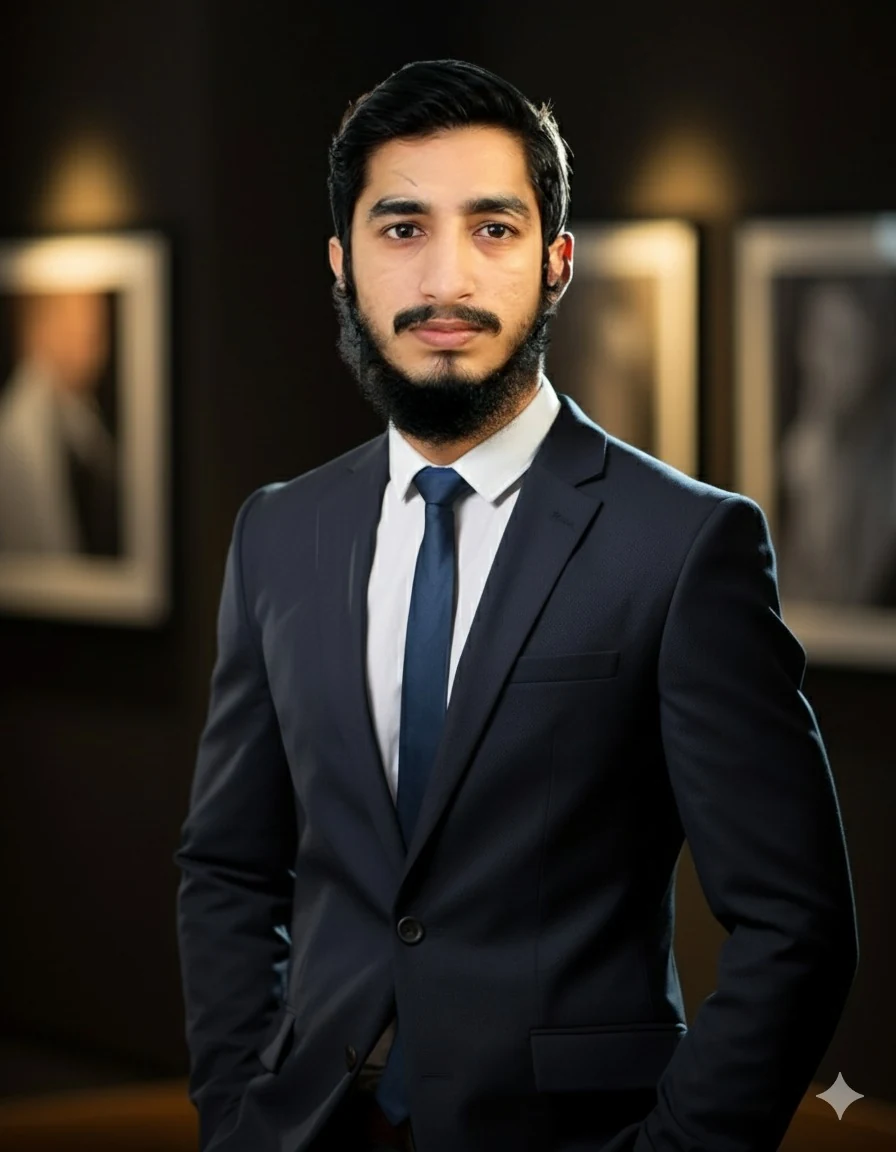
Saad Danish is a co-founder and director of Nest Fumigation Services Private Limited, a licensed pest-control and fumigation company based in DHA Phase 4, Karachi. He oversees the company's administration, client services, and marketing, working alongside NFS's technical team to deliver residential and commercial pest management across Karachi — from termite proofing and general pest control to HACCP and Sindh Food Authority compliance programmes for food, warehouse, and industrial clients. Nest Fumigation Services is ISO 9001:2015 certified and a member of the SPMA (Sindh Pest Management Association), PPMA, and the Karachi Chamber of Commerce and Industry.
More about our team →