There is a question we ask in North Nazimabad that we do not ask in Bahria: can we see the tap you want us to fill from. It sounds like a strange thing to care about when you are cleaning a sofa, but the water going into the machine is most of what ends up in your upholstery, and across a lot of North Nazimabad the supply arrives through galvanised steel plumbing old enough to be shedding into it. Hard, iron-bearing water does two specific things to a fabric sofa — it deactivates the cleaning chemistry, and it leaves mineral and iron residue behind in a light-coloured weave. Neither shows on the day. Both show three weeks later, as a sofa that has gone dull or picked up a faint orange cast. This page covers what we do about it, alongside our Karachi-wide sofa cleaning service.
What hard water actually does to a clean
It disables the surfactant. The workhorse detergents in upholstery pre-sprays are anionic — negatively charged molecules that surround and lift soil. Calcium and magnesium ions in hard water carry the opposite charge and bind to them, forming insoluble salts that do no cleaning at all. In practical terms a pre-spray mixed with hard water is a weaker pre-spray, and the technician compensates by using more product or scrubbing harder, both of which make the outcome worse rather than better.
It leaves residue in the fibre. Those insoluble calcium and magnesium salts do not rinse cleanly away. They deposit in the weave, and the result is the dull, slightly stiff, faintly grey finish people describe as “it looks clean but it does not look fresh”. On dark fabrics you barely see it. On the beige, cream and light grey sets that are common in North Nazimabad lounges it is obvious within a month.
Iron is a separate problem. Where the supply runs through corroding galvanised pipe, the water carries ferric particulate. Put that through a light upholstery fabric and you can set a faint rust tint into the weave, and chlorine-based products make it worse, because oxidising iron darkens the mark rather than removing it. Lifting an iron stain needs an acidic chelation approach, not more detergent.
What we do about it on a North Nazimabad job
We look at the water before we mix anything. A quick look at the tap you have offered us, and at the inside of your washbasin. Orange staining around a drain or at the fill line of a basin is the reliable household tell that the supply is carrying iron. If the ground-floor tap is fed from a different tank to the roof supply, we will ask which one it is.
We add a water conditioner where the supply is hard. A chelating agent in the solution sequesters the calcium and magnesium so they cannot bind to the surfactant. This is ordinary practice in the trade and it costs very little; the reason it often gets skipped is that nobody checks the water. It restores the pre-spray to full strength and stops the mineral residue forming.
Where the supply is visibly iron-bearing, we will ask to fill somewhere else. Usually that is a filtered tap in the kitchen, or the neighbour’s supply on a shared job. On light-coloured fabric it is not worth the risk, and we would rather spend ten minutes finding a better tap than explain a rust cast later.
And we say when the tank is the real problem. If the water coming out of your taps is putting iron into a sofa, it is also going into your kettle and your washing. Cleaning the upholstery does not address that. Where we see it we say so, and point at water tank cleaning in North Nazimabad, while being clear that a tank clean removes the deposit and not the corroding pipe upstream of it.
Reading the fabric code
The water question sits on top of the normal process, it does not replace it. Every job still starts at the upholstery tag, and where the tag is missing, at a fibre burn test on a hidden thread plus a colourfastness test on a concealed panel.
W-coded (water-safe) — polyester, microfibre and most cotton blends, which is the bulk of North Nazimabad lounge furniture. Encapsulation or hot water extraction, chosen on soil level and on how well the room ventilates.
S-coded (solvent-only) — rayon, viscose, silk blends and most imported “velvet”. Dry solvent process only. Water on these causes shrinkage, ring-shaped watermarks and pile distortion that cannot be reversed. Note that the water-quality issue does not arise at all on these, because no water is used.
Leather and rexine. Hide gets a pH-balanced cleaner and a conditioner, never an alkaline pre-spray. Rexine and bonded leather carry a polyurethane surface layer that delaminates under scrubbing, so they are cleaned gently and conditioned lightly. Once peeling has started nothing reverses it.
Our 6-step protocol in North Nazimabad
Step 1 — Inspection, code check, water check and damage record. Fabric code or burn test, colourfastness on a hidden section, a look at the tap and basin, and photographs of every existing tear, watermark, pile crush and fade line before we touch anything.
Step 2. Dry soil removal. High-suction vacuum with crevice tool through the seat crevices, under the cushions and along the deck. This is the step cheap operators skip and it matters more than any chemical — water onto dry grit makes mud and drives it into the weave.
Step 3. Solution made up with a conditioner, then pre-spray and dwell. Water conditioner first where the supply needs it, then an alkaline pre-spray at roughly pH 9 to 9.5 for body-oil soiling, with an enzyme component on food and protein marks, and 10 to 15 minutes of dwell. Surfactants need contact time; agitating straight away just moves soil around.
Step 4. Encapsulation or hot water extraction. Encapsulation applies a polymer that crystallises around each soil particle as it dries and vacuums away — minimal moisture, 2 to 4 hour dry time, which suits the apartment stock in the newer blocks. Hot water extraction runs solution at 60 to 70°C through the upholstery and recovers it under vacuum, removing more embedded soil but leaving more residual moisture. We choose on soil level and on whether the room can actually ventilate.
Step 5. Neutralising rinse, and iron work if needed. An acidic rinse takes the fabric back to pH 5.5 to 6.5, which removes alkaline residue and, usefully here, also helps with light mineral deposition. Where an existing rust mark is present from previous cleaning or from a leak, it gets a targeted citric acid or sodium citrate treatment that binds the ferric ion, rather than more detergent — detergent does not touch iron.
Step 6 — Grooming, drying and optional protector. Pile groomed in one direction, air movers positioned, and in a closed flat we tell you to run the AC rather than opening windows, because outdoor humidity in monsoon slows drying rather than speeding it. A fabric protector can be applied on request; it does not make a sofa stain-proof, it buys you time to blot a spill before it wicks in.
Houses and flats across the blocks
The older bungalows. Blocks A through H carry a lot of long-tenure family houses, and the sofas in them tend to be older, larger and often re-upholstered at least once. On anything with coir or cotton padding rather than foam we use low-moisture methods, because those materials hold water for days in Karachi humidity where foam releases it in hours. We check the padding through a gap at the back before choosing.
The apartment stock. The newer mid-rise blocks and the buildings along the main corridors have the same constraint as any Karachi flat: a closed lounge with limited ventilation cannot dry a saturated foam core quickly. Encapsulation is usually the right call there, and our flat kit is portable by design so a building without a working lift is not a problem — tell us the floor at booking so the team loads accordingly.
Dust mites and the closed lounge
Upholstery in a humid, enclosed Karachi room is good habitat for Dermatophagoides house dust mites. They feed on shed skin and establish in soft furnishings at the humidity a closed lounge holds through summer. It is the mite faecal protein rather than the mite itself that drives the allergic response — the morning congestion that eases when someone travels and returns when they are home.
Hot water extraction at 60 to 70°C reduces the population and, more usefully, flushes out the accumulated allergen load. Encapsulation with thorough dry-soil removal beforehand helps too, though it is less aggressive on the deep reservoir. In an allergy household the mattress almost always holds more allergen than the sofa, so mattress cleaning is usually the higher-value job of the two. No process eliminates dust mites permanently — humidity control keeps numbers down between visits.
North Nazimabad pricing
Priced per seat, by fabric type and soil level. Identical published bands to DHA, Clifton, PECHS, Gulshan and Bahria — no locality premium, and no charge for the water conditioner.
Encapsulation (microfibre and low-soil W-coded): PKR 1,000-1,800 per seat.
Hot water extraction (cotton, linen, standard W-coded): PKR 1,500-2,500 per seat.
Velvet: PKR 2,000-3,500 per seat.
Leather: PKR 2,500-4,500 per seat.
Dry-clean solvent (silk, wool, S-coded): PKR 3,000-5,500 per seat.
Typical 3+2+1 set: PKR 6,500-12,000 in microfibre, PKR 8,000-15,000 in cotton, PKR 12,000-21,000 in velvet, PKR 15,000-25,000 in leather.
Surcharges: individual stain treatment PKR 500-1,500 per stain; mould or mildew remediation PKR 1,500-3,000 per seat. Bundling with curtain and blinds cleaning, carpet cleaning or a room deep clean reduces the combined job. Full per-fabric bands are on our sofa cleaning cost guide.
Booking, and what happens on the day
WhatsApp +92-311-1101810 with photos of the sofa — one wide shot and one close-up of the worst area — plus the seat count, your block, and whether the property is a house or a flat with a floor number. If you already know your water runs rusty, say so; it changes what the team brings. Price band and slot confirmed inside 30 minutes during business hours, Mon-Sat 09:00-21:00. North Nazimabad is 35-45 minutes from our Phase 4 office depending on the route.
A two-person team arrives with an extraction unit, encapsulation kit, dry solvent system, vacuum with crevice tools, water conditioner, pre-sprays, neutralising rinse, spotting agents including citrate for iron marks, air movers and PPE. Clear small items and fragile pieces from around the sofa; we move the furniture itself. Expect two to three hours for a five to seven seat set. Touch-dry is 2 to 4 hours after encapsulation, 6 to 12 after extraction in a closed flat. Before-and-after photos go to you on WhatsApp.
North Nazimabad questions
Which blocks do you cover?
Block A through Block T, plus Hyderi, Five Star Chowrangi, Board Office and the Shahrah-e-Noor Jehan corridor, at identical published rates. Typically 35-45 minutes from our Phase 4 office. Same-day is usually available for morning bookings, and we can often fit two flats in the same building into one visit.
Does the water really make that much difference?
On a dark, heavily soiled sofa, not much. On a light-coloured fabric set it makes a visible difference within weeks — dull, slightly stiff fabric from mineral deposition, or a faint orange cast where the supply carries iron. It costs us almost nothing to add a conditioner and to choose the tap deliberately, so there is no reason not to. The only cost is the ten minutes of checking, which most operators skip.
Our last cleaner left the sofa looking dull. Can that be fixed?
Often, yes. Dullness after a clean is usually either alkaline detergent residue left because the rinse step was skipped, or mineral residue from hard water. Both respond to a proper acidic rinse — the fabric comes back to pH 5.5 to 6.5 and the residue comes out with it. What we cannot fix is dye loss, pile crush that has set, or fibre damage from abrasive scrubbing, so we look before promising.
There is a rust-coloured mark on our light sofa. Will cleaning remove it?
Usually, with the right chemistry. Iron marks need an acidic chelating treatment — citric acid or sodium citrate binds the ferric ion and lifts it. What makes them worse is any chlorine-based or oxidising product, which darkens the stain instead of removing it. If a previous cleaner has already treated the mark that way, tell us, because it changes what is achievable.
There is no lift in our building. Can you still come?
Yes. Our flat kit is portable by design — compact extraction and encapsulation equipment carried up rather than truck-mounted gear. Tell us the floor and the lift situation when you book so the team loads accordingly. It does not change the price.
Is it safe for children and asthma sufferers?
Yes. The pre-sprays, conditioners and encapsulation polymers are standard upholstery-grade products, and the neutralising rinse exists specifically so nothing alkaline is left in the fabric where people sit. For allergy households we recommend hot water extraction at 60-70°C where the room can ventilate, because the benefit is flushing out accumulated dust-mite allergen. Keep children and pets off the sofa until it is properly dry.
Book sofa cleaning across North Nazimabad Block A-T
WhatsApp or call +92-311-1101810, or email contact@nestfumigationservices.com. We cover North Nazimabad Block A-T, Hyderi, Five Star Chowrangi and Board Office from our office at Plot #14, 2/1 2nd Gizri Street, DHA Phase 4, Karachi 75500, Mon-Sat 09:00-21:00. ISO 9001:2015 certified; members of KCCI, SPMA and PPMA. See also our Karachi-wide sofa cleaning service, upholstery cleaning for chairs and dining sets, and pest control in North Nazimabad.
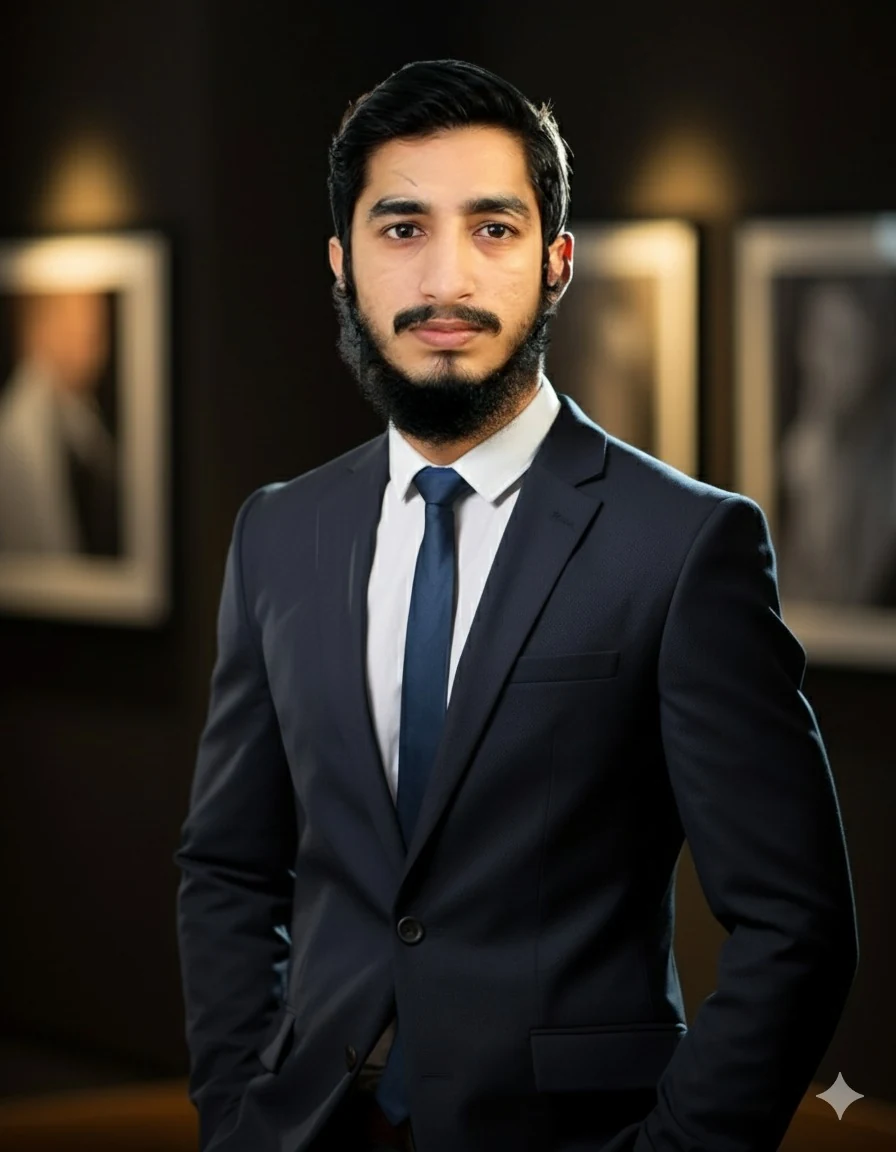
Saad Danish is a co-founder and director of Nest Fumigation Services Private Limited, a licensed pest-control and fumigation company based in DHA Phase 4, Karachi. He oversees the company's administration, client services, and marketing, working alongside NFS's technical team to deliver residential and commercial pest management across Karachi — from termite proofing and general pest control to HACCP and Sindh Food Authority compliance programmes for food, warehouse, and industrial clients. Nest Fumigation Services is ISO 9001:2015 certified and a member of the SPMA (Sindh Pest Management Association), PPMA, and the Karachi Chamber of Commerce and Industry.
More about our team →