PECHS is one of the older parts of Karachi we work in, and the furniture reflects it. Alongside the modern sets we clean here, a real share of the sofas in Blocks 1 through 6 are twenty, thirty or forty years old — teak or sheesham frames, jute webbing, and padding that is coir and cotton rather than polyurethane foam. Those pieces are usually the ones the family cares about most, and they are also the ones a standard water-based clean is most likely to damage. Foam drains and springs back. Coir compacts, holds water for days and can rot from the inside while the surface looks fine. So in PECHS we test the padding as well as the fabric before choosing a method. This page covers that, alongside our Karachi-wide sofa cleaning service.
Why the padding matters as much as the fabric
Coir and cotton behave nothing like foam. Polyurethane foam is an open cell structure: water passes through it, extraction recovers most of it, and what is left evaporates from a large internal surface area. Coir fibre and cotton batting are the opposite — dense, highly absorbent, and slow to release. Wet them properly and you are looking at multiple days of drying in Karachi humidity rather than hours, with the moisture sitting against a timber frame the whole time. That is how you get a sofa that smells musty a week after cleaning and a frame joint that has started to loosen.
How we check. We press the seat and watch the recovery, look at the deck through a gap at the back or under the skirt where the covering is often open, and check whether the piece has springs and webbing rather than a foam block. On a re-upholstered frame the fabric can be five years old and the padding forty. The tag tells you nothing about that, which is exactly why an old PECHS sofa needs looking into rather than pricing off a photograph.
What we do about it. On coir or cotton padding we run low-moisture methods — encapsulation or a dry solvent process — with controlled forced drying, rather than hot water extraction. Where a piece genuinely needs deep soil removal we do it in stages with drying time in between, and we say up front that it will take a second visit rather than promising it in one pass.
Older frames, older fabrics
Exposed timber needs protecting during the clean. Teak and sheesham arms, show-wood legs and carved frames are common on PECHS sets. Cleaning solution running onto polished timber lifts the finish and leaves a pale mark. The fix is not skill, it is preparation — we mask the show-wood before any liquid goes near the upholstery, and we keep the wand off the frame edge rather than trusting our aim.
Old natural fabrics dye-bleed more often than modern ones. Cotton, linen and older hand-dyed covers are far less colourfast than a modern polyester weave, and the darker traditional colours are the worst for it. Every job gets a colourfastness test on a concealed panel, and where a fabric bleeds we switch to a solvent process or, if the risk is high, tell the owner that cleaning the cover is not advisable and that re-covering is the honest recommendation.
Sun damage is not soil. A forty-year-old sofa that has sat by a window has usually lost dye on the exposed side. Cleaning removes what is on top of the fibre; it does not put colour back. We photograph and point out fade lines before we start so nobody expects an even finish on a panel that has been bleached for a decade.
Reading the fabric code
Modern sets in PECHS get the same treatment as anywhere else. The code decides the chemistry, and where the tag is gone, which it usually is on anything older — a fibre burn test on a hidden thread tells us what we are dealing with.
W-coded (water-safe) — polyester, microfibre, most cotton blends. Encapsulation or hot water extraction, subject to what the padding underneath will tolerate.
S-coded (solvent-only) — rayon, viscose, silk blends and the imported velvets. Dry solvent only. Water causes shrinkage, ring-shaped watermarks and permanent pile distortion.
Leather and rexine. Genuine hide gets a pH-balanced cleaner and a conditioner, never an alkaline pre-spray. Rexine and bonded leather have a polyurethane surface layer that delaminates under scrubbing, so they are cleaned gently and conditioned lightly. Once peeling has started, no cleaning process reverses it.
Our 6-step protocol on a PECHS job
Step 1 — Inspection, padding check, code check and damage record. Fabric code or burn test, colourfastness on a concealed section, an assessment of the padding and frame, and photographs of every existing tear, watermark, fade line, loose joint and previous repair. On older furniture this stage takes longer than it does on a new set, and it is what the rest of the job is built on.
Step 2. Dry soil removal. High-suction vacuum with crevice tool through the seat crevices, under the cushions, along the deck and into the skirt. Decades of grit accumulate in the deck of an old sofa. Introducing water onto it turns it into mud and drives it into the weave, so this stage does the heavy lifting.
Step 3. Masking and pre-spray. Show-wood masked. An alkaline pre-spray at roughly pH 9 to 9.5 for body-oil soiling, with an enzyme component on food and protein stains, and 10 to 15 minutes of dwell so the surfactant has contact time to work.
Step 4 — Low-moisture clean, or extraction where the padding allows. Encapsulation applies a polymer that crystallises around each soil particle as it dries and vacuums away — minimal moisture, 2 to 4 hour dry time. That is the default on coir, cotton or unknown padding. Hot water extraction at 60 to 70°C is reserved for foam-cored modern sets that are genuinely heavily soiled.
Step 5. Neutralising rinse and spot work. An acidic rinse returns the fabric to pH 5.5 to 6.5. Alkaline residue left in the fibre is sticky and attracts soil quickly, which is why a cheaply cleaned sofa often looks worse two months later than it did before. Remaining spots are treated by stain type rather than with repeated doses of the same chemical.
Step 6 — Grooming, forced drying and optional protector. Pile groomed in one direction and air movers positioned to move air through the piece rather than across it, which matters far more on absorbent padding than on foam. A fabric protector can be applied on request; it does not make upholstery stain-proof, it buys you time to blot a spill before it wicks in.
Converted-house offices and clinics
A great deal of PECHS commercial space is a converted residential house — small offices, clinics, tuition centres and consultancies along the main arteries and inside the blocks. The upholstery in those buildings is a different job from a family lounge.
Waiting-room seating takes constant, shallow use. Dozens of people a day, short contact times, so the soil is concentrated on the seat front and the arm caps rather than distributed. That responds well to encapsulation on a regular schedule — quarterly on a busy clinic, and badly to being left for two years and then deep-cleaned once.
Downtime is the constraint. A clinic cannot have a wet waiting room on Monday morning. We schedule commercial upholstery for late evening or Sunday and use low-moisture methods specifically so the space is usable at opening, and we can quote an AMC that covers seating, carpet and blinds on one schedule. Where a clinic also needs food-safe or premises pest cover, that sits alongside our pest control in PECHS service.
Dust mites in long-occupied homes
A sofa that has been in the same lounge for twenty years holds a much larger dust-mite allergen reservoir than a new one, simply because the reservoir builds over time. Dermatophagoides house dust mites feed on shed human skin and live in soft furnishings; it is the mite faecal protein rather than the mite itself that provokes the allergic response — the morning congestion, or the cough that eases when someone travels and returns when they are home.
Hot water extraction at 60 to 70°C both reduces the population and flushes accumulated allergen, which is the more valuable part. Where the padding will not tolerate extraction, very thorough dry soil removal followed by encapsulation still lifts a substantial part of the surface load, though it is less aggressive on the deep reservoir, and in that case we would rather be straight about the limit than overstate it. In allergy households the mattress is almost always the bigger reservoir, so pairing with mattress cleaning is usually the higher-value move.
PECHS pricing
Priced per seat, by fabric type and soil level. Identical published bands to DHA, Clifton, Gulshan and Bahria — no locality premium.
Encapsulation (microfibre and low-soil W-coded): PKR 1,000-1,800 per seat.
Hot water extraction (cotton, linen, standard W-coded): PKR 1,500-2,500 per seat.
Velvet: PKR 2,000-3,500 per seat.
Leather: PKR 2,500-4,500 per seat.
Dry-clean solvent (silk, wool, S-coded): PKR 3,000-5,500 per seat.
Typical 3+2+1 set: PKR 6,500-12,000 in microfibre, PKR 8,000-15,000 in cotton, PKR 12,000-21,000 in velvet, PKR 15,000-25,000 in leather.
Surcharges: individual stain treatment PKR 500-1,500 per stain; mould or mildew remediation PKR 1,500-3,000 per seat. Bundling with curtain and blinds cleaning, carpet cleaning or a room deep clean reduces the combined job. Full per-fabric bands are on our sofa cleaning cost guide.
Booking, and what happens on the day
WhatsApp +92-311-1101810 with photos — one wide shot, one close-up of the worst area, and if the sofa is old, one shot underneath or behind where the padding is visible through a gap. That last photo genuinely changes the quote, because it tells us whether we are dealing with foam or coir before anyone travels. Add the seat count and your PECHS block. Confirmation inside 30 minutes during business hours, Mon-Sat 09:00-21:00. PECHS is 15-25 minutes from our Phase 4 office.
A two-person team arrives with an extraction unit, encapsulation kit, dry solvent system, vacuum with crevice tools, masking materials for show-wood, pre-sprays, neutralising rinse, spotting agents, air movers and PPE. Clear small items and fragile pieces from around the furniture; we move the furniture itself. Expect two to three hours for a five to seven seat set. Touch-dry is 2 to 4 hours after encapsulation and longer on absorbent padding, which we will tell you before we start rather than after. Before-and-after photos go to you on WhatsApp.
PECHS-specific questions
Which parts of PECHS do you cover?
PECHS Block 1 through Block 6, plus the Tariq Road and Shahrah-e-Quaideen corridors and the adjoining Society areas, at identical published rates. Typically 15-25 minutes from our Phase 4 office, so same-day is usually available for morning bookings.
Our sofa is very old. Is it worth cleaning or should we re-upholster?
It depends on what has failed. If the frame is sound and the fabric is intact but soiled, cleaning is worth it and considerably cheaper. If the padding has broken down, the webbing has sagged or the cover is thin at the wear points, cleaning improves the appearance for a short time and does nothing about the underlying problem. We will tell you which one you are looking at during the inspection, including when the answer is that you should spend the money on re-upholstery instead of on us.
Will cleaning damage the wooden arms and legs?
Not if the show-wood is masked before any liquid is used, which is standard on every job with exposed timber. Solution running onto a polished teak arm lifts the finish and leaves a pale patch, and that is a preparation failure rather than an unavoidable risk. If your set has carved or inlaid frames, mention it at booking so the team allows the extra time.
Why would cleaning need two visits?
Only on heavily soiled furniture with coir or cotton padding. Those materials hold water far longer than foam, so putting all the moisture in at once risks a sofa that stays damp for days against a timber frame. Cleaning in stages with drying in between gets the same result safely. It is quoted as one job — the gap is drying time, not additional work.
Do you clean office and clinic seating in PECHS?
Yes, and a lot of it — the converted houses along Tariq Road and inside the blocks are full of waiting rooms. We schedule commercial work for evenings or Sundays and use low-moisture methods so the space is usable at opening. Regular quarterly encapsulation costs less over a year than an annual deep clean and keeps the seating presentable throughout, which matters more in a waiting room than in a lounge.
Is it safe for children and asthma sufferers?
Yes. The pre-sprays and encapsulation polymers are standard upholstery-grade products, and the neutralising rinse exists specifically so nothing alkaline is left in the fabric where people sit. For allergy households the useful benefit is flushing out accumulated dust-mite allergen, so we recommend the most thorough method the padding will safely tolerate. Keep children and pets off the sofa until it is properly dry.
Book sofa cleaning across PECHS Block 1-6
WhatsApp or call +92-311-1101810, or email contact@nestfumigationservices.com. We cover PECHS Block 1-6, Tariq Road, Shahrah-e-Quaideen and the surrounding Society areas from our office at Plot #14, 2/1 2nd Gizri Street, DHA Phase 4, Karachi 75500, Mon-Sat 09:00-21:00. ISO 9001:2015 certified; members of KCCI, SPMA and PPMA. See also our Karachi-wide sofa cleaning service, upholstery cleaning for chairs and dining sets, and pest control in PECHS.
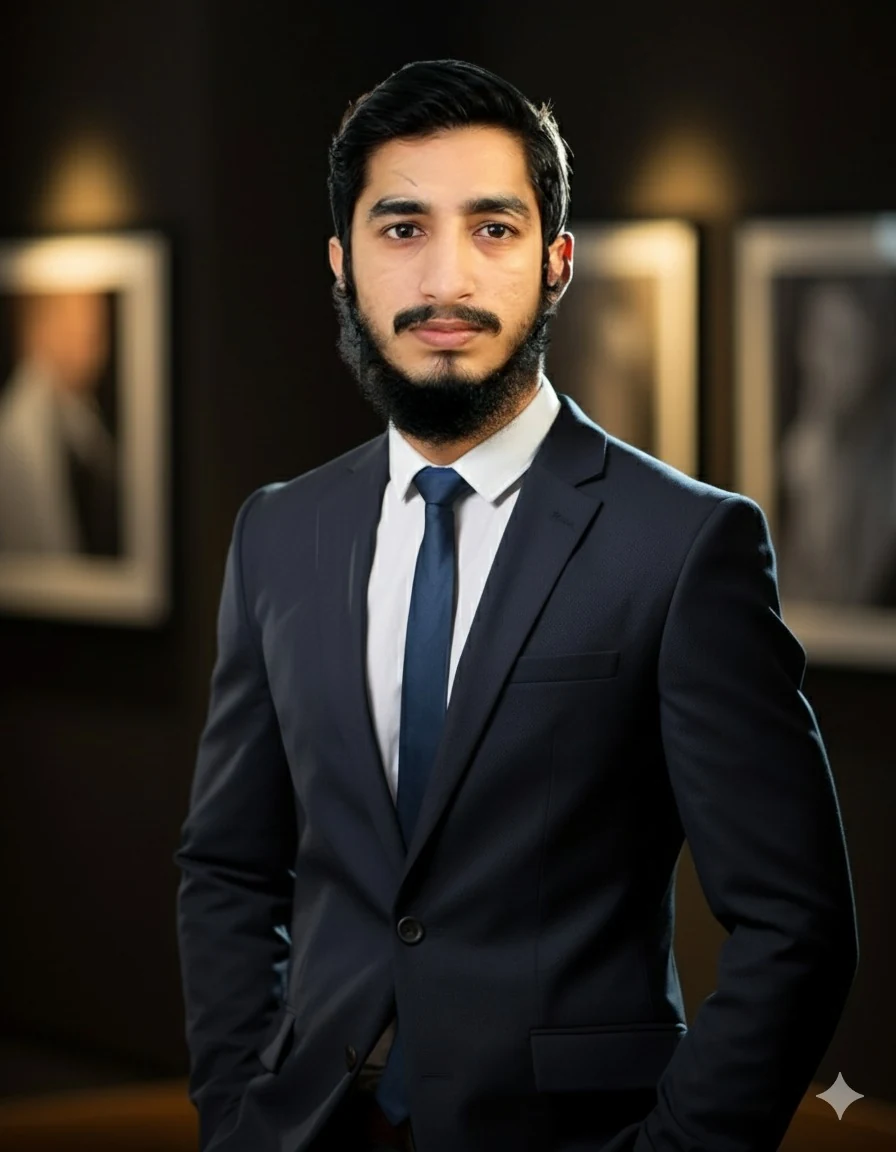
Saad Danish is a co-founder and director of Nest Fumigation Services Private Limited, a licensed pest-control and fumigation company based in DHA Phase 4, Karachi. He oversees the company's administration, client services, and marketing, working alongside NFS's technical team to deliver residential and commercial pest management across Karachi — from termite proofing and general pest control to HACCP and Sindh Food Authority compliance programmes for food, warehouse, and industrial clients. Nest Fumigation Services is ISO 9001:2015 certified and a member of the SPMA (Sindh Pest Management Association), PPMA, and the Karachi Chamber of Commerce and Industry.
More about our team →