







Most sofa cleaning advice written for Karachi assumes a modern foam-cushioned set in a sealed apartment. That describes very little of what our team actually opens up in Malir. Between Model Colony, Saudabad, Quaidabad and the older lanes off Malir Halt, the seating in a typical home is ten to twenty-five years old, filled with coir or cotton wadding rather than polyurethane foam, and carrying a mineral dust load that behaves nothing like the body-oil soiling in a DHA lounge. The fill and the dust decide almost every choice we make here. This page sits alongside our Karachi-wide sofa cleaning service.
What the dust in Malir actually is, and why it changes the first step
It is mineral, not organic. Malir sits on the alluvial fan of the Malir River, where paved city gives way to unmetalled link roads and open ground. What blows into a house here is quartz-rich sand and silt with a fraction of crushed limestone — hard, angular particles considerably harder than any textile fibre. The soil in a closed inner-city flat is mostly shed skin and cooking aerosol: greasy and soft, needing surfactant chemistry to lift. Malir grit is a mechanical abrasive. It does not need chemistry; it needs removing before anything wet touches it.
The Sharah-e-Faisal corridor adds a second, oilier layer. Homes along Sharah-e-Faisal and the National Highway, and around Malir Halt, also catch diesel particulate — fine, black, slightly greasy, and bonding to fibre in a way plain sand does not. On light upholstery it reads as general greying rather than spots, which is why a Malir sofa often looks tired without carrying any identifiable stain. Grit comes out dry; the diesel film needs a surfactant pre-spray with dwell time.
So dry soil removal is the load-bearing step, not a formality. Put water on embedded angular grit and you make an abrasive slurry, drive it into the weave, and every subsequent sit grinds those particles against the fibre. On a Malir set we run the vacuum stage substantially longer than elsewhere, and on a genuinely dusty older set it can take forty minutes before any chemical is opened.
In Malir the fill matters more than the fabric
Coir and rubberised coir. Everywhere else the first question is the fabric code; here we ask what is inside the cushion straight after, because that decides how much water the sofa can survive. Coconut-fibre cushioning was standard through the 1980s and 1990s and is still used by local makers. It is hygroscopic — it actively absorbs and holds atmospheric moisture, and takes up far more water than foam while giving it back far more slowly. Saturate one with an extraction pass and the core stays damp for a day or more, long enough in Karachi for microbial growth and a musty smell. Worse, wet coir compresses under the first person who sits down and does not spring back. So on coir we use low-moisture encapsulation almost without exception.
Cotton wadding and cotton-over-coir. Common in the tie-on gaddas and back cushions on older sets. Cotton wicks aggressively: surface moisture travels sideways and down through the batting carrying dissolved soil, then deposits it at the edge of the wet zone as it dries. The result is a brown ring that appears hours after the cleaner has left and looks like fresh damage. The control is moisture discipline plus a dry bonnet pass.
Polyurethane foam. Newer sets, and any Malir home re-upholstered in the last decade. Foam releases water reasonably fast and recovers its shape, so it tolerates hot water extraction where the code allows. We identify the fill by feel, by weight and where possible through a zip or open seam on the underside — two minutes of work separating a sofa that comes back to life from one that never recovers its shape.
Cane and wooden-frame sets: two different jobs in one room
Malir homes commonly run a mixed drawing room — an upholstered three-piece for the family, plus cane or carved wooden-frame seating with loose cushions for guests, often with a separate baithak. These are not one job. Cane and rattan are plant tissue: soaking swells the fibre, and as it dries and shrinks the weave loosens permanently and the strands go brittle at the bends. Frames get vacuumed with a soft brush head, worked with a dry or barely damp cloth along the weave, and dried immediately. Polished and lacquered wood gets a neutral wipe rather than an alkaline cleaner, whose alkalis dull and eventually lift a shellac finish. Loose cushions come off and are processed separately, so they dry properly rather than sitting on a frame that traps moisture underneath.
Here is something that costs us money to say. On many cane and wooden-frame sets the cushion covers are removable and machine washable, and the frame needs nothing more than a careful vacuum. If that is what you have, you do not need to pay us. What genuinely needs us is fixed upholstery, non-removable covers, or embedded soil a domestic wash will not touch.
Reading the fabric code before choosing chemistry
After the fill, the tag. Where it is long gone — normal on furniture this age — we run a fibre burn test on a hidden thread and a colourfastness test on a concealed panel.
W-coded (water-safe) covers most polyester, microfibre and cotton blends, the majority of Malir upholstery; these accept encapsulation or extraction, with the fill usually casting the deciding vote. S-coded (solvent-only) means rayon, viscose, the imported velvets and some silk blends: dry solvent only, because water causes shrinkage, watermarking and pile distortion that cannot be reversed.
WS-coded permits either process, so we choose on soil type — solvent for the oily diesel film, water-based for general body soil. X-coded is vacuum and dry-brush only; uncommon, but it turns up on decorative and older hand-loomed pieces, and applying any liquid to one is not recoverable.
Older dyes need a harder colourfastness test. Fabric bought in Karachi twenty years ago bleeds more readily than a modern imported weave, particularly in deep reds and indigos. We test with the actual solution we intend to use, and if it bleeds we drop to solvent regardless of the code.
Our 6-step protocol in a Malir home
Step 1 — Inspection, fill check, code check and damage record. Fill identified, fabric code or burn test, colourfastness on a concealed panel, and photographs of every existing tear, watermark, pile crush and flattened cushion before we touch anything. On older furniture there is more pre-existing wear to be blamed for later, so the record matters more.
Step 2. Extended dry soil removal. High-suction vacuum with crevice tool through crevices, under cushions, along the deck, into the skirt and across the back panel. On fringe and corridor properties we double the normal time. Every gram of grit lifted dry is a gram that never becomes slurry.
Step 3 — Pre-spray and dwell. An alkaline pre-spray at roughly pH 9 to 9.5 for body-oil and diesel-film soiling, with an enzyme component on food and protein marks, and 10 to 15 minutes of dwell. Surfactants need contact time; agitating straight away only redistributes soil.
Step 4 — Encapsulation, extraction or dry solvent, chosen on fill and code. Encapsulation lays down a polymer that crystallises around each soil particle as it dries so the crystals vacuum away, at a fraction of the moisture — our default on coir and cotton. Hot water extraction runs solution at 60 to 70°C through the upholstery and recovers it under vacuum, reaching deeper into padding, and we use it on foam-filled W-coded sets.
Step 5. Neutralising rinse and wicking control. An acidic rinse takes the fabric back to pH 5.5 to 6.5, because alkaline residue left in the fibre is sticky and pulls fresh soil in fast — the reason a cheaply cleaned sofa can look worse two months on. On cotton-wadded cushions we follow with a dry bonnet pass before moisture can wick a ring.
Step 6 — Grooming, drying and optional protector. Pile groomed in one direction, air movers positioned. Malir homes ventilate better than an inner-city flat, so where a coir cushion has taken moisture we ask for windows open on two sides and a fan directed across, not at, the cushion face. A protector does not make upholstery stain-proof; it buys you minutes to blot a spill.
Fleas, dust mites, and the part cleaning will not fix
Malir’s fringe character brings a pest profile you see much less of in the dense central blocks. Households near open ground or market gardens, those keeping poultry or goats, and any home with a cat or dog that goes outside carry higher pressure from the cat flea, Ctenocephalides felis — the species behind most flea bites in Karachi homes whichever animal is in the house. Its eggs are not sticky; they roll off the animal and collect where it rests, very often the sofa. The larvae then live in the crevices feeding on organic debris, not on blood.
Vacuuming and extraction remove a large share of the eggs, larvae and debris, and that genuinely helps. It does not end an infestation. Flea pupae sit inside a sticky cocoon that resists both suction and cleaning solution and can hold for weeks before emerging, which is why bites return a fortnight after a good clean and the customer concludes the cleaning failed. It did not fail; it was the wrong tool. If anyone is being bitten, book pest control in Malir, where treatment uses an insect growth regulator to break the life cycle. Cleaning is worth doing alongside that, not instead of it.
On dust mites the picture is milder here than in a sealed flat. Dermatophagoides house dust mites need sustained humidity, and a well-ventilated Malir house with dry inland air for much of the year suits them less than a closed, air-conditioned apartment. Where there is a genuine allergy problem we recommend extraction on foam-filled seating, paired with mattress cleaning, since the mattress holds a much larger reservoir.
Malir pricing
Priced per seat, by fabric type and soil level. The published bands are the same as DHA, Clifton, PECHS and Gulshan — no locality premium and no fuel surcharge on Malir. The extra vacuum time an abrasive-dust job needs sits inside the normal rate.
Encapsulation (microfibre and low-soil W-coded, and our default on coir fills): PKR 1,000-1,800 per seat.
Hot water extraction (cotton, linen, standard W-coded on foam): PKR 1,500-2,500 per seat.
Velvet: PKR 2,000-3,500 per seat.
Leather: PKR 2,500-4,500 per seat.
Dry-clean solvent (silk, wool, S-coded): PKR 3,000-5,500 per seat.
Typical 3+2+1 set: PKR 6,500-12,000 in microfibre, PKR 8,000-15,000 in cotton, PKR 12,000-21,000 in velvet, PKR 15,000-25,000 in leather.
Surcharges: individual stain treatment PKR 500-1,500 per stain; mould or mildew remediation PKR 1,500-3,000 per seat. Bundling with curtain and blinds cleaning, carpet cleaning or a room deep clean reduces the combined job — worth considering on a larger Malir plot, where a full house deep clean in one visit beats piecemeal bookings. Full per-fabric bands are on our sofa cleaning cost guide.
Booking, and what happens on the day
WhatsApp +92-311-1101810 with photos — one wide shot, one close-up of the worst area, and if you can, one of the underside or an open zip so we can see the fill. That fill photo is the useful one on older furniture: it tells us the likely method and price band before anyone travels. Send the seat count, your area, and whether there is cane or wooden-frame seating in the room. Confirmation inside 30 minutes, Mon-Sat 09:30-20:00.
A two-person team arrives with an extraction unit, encapsulation kit, dry solvent system, a vacuum with crevice and soft-brush tools, pre-sprays, neutralising rinse, air movers and PPE. Clear small and fragile items from around the furniture; we move the furniture itself. Expect two to three hours for a five to seven seat set. Touch-dry is 2 to 4 hours after encapsulation and 4 to 8 after extraction — longer on a coir cushion, which is exactly why we avoid putting much water into one. Before-and-after photos go to you on WhatsApp.
Malir-specific questions
Which parts of Malir do you cover?
Model Colony, Saudabad, Quaidabad, Malir Halt, Malir City, Malir Cantonment, Khokhrapar, Jaffar-e-Tayyar and the Shah Faisal corridor, at identical rates with no surcharge. Allow 35 to 50 minutes from our Phase 4 office. For Malir Cantonment, tell us at booking so we can arrange gate entry in advance rather than negotiate at the checkpoint while your slot burns.
Our sofa is twenty years old. Is it worth cleaning?
Sometimes yes, sometimes no, and we will tell you which before quoting. If the fabric is sound and the cushions still have some recovery, a proper clean makes a real difference for far less than replacing the set. If the coir has gone hard and flat, or the weave is opening at the arm caps, cleaning will not bring that back — that is a re-fill and re-upholstery job, and paying us repeatedly to clean it is money badly spent.
Can you clean our cane and wooden-frame drawing room set?
Yes, as two separate processes. Loose cushions come off for the normal upholstery treatment; the frame is vacuumed with a soft brush and wiped with a dry or barely damp cloth. Cane must not be soaked. And if your cushion covers unzip and are machine washable, say so, because you may not need us for that part at all. We charge for the seats we actually process.
A brown ring appeared a day after a previous cleaning. What is that?
Wicking, and it is very common on cotton-wadded cushions. Surface moisture travels through the batting carrying dissolved soil, then deposits it at the edge of the wet zone as it dries — hours after the cleaner has packed up. It is not new dirt. It is usually correctable with a controlled re-clean, and prevented in the first place by using less water and finishing with a dry bonnet pass.
Will cleaning get rid of the fleas, and is it safe for children?
Cleaning removes many of the eggs, larvae and debris, which helps, but it will not end an infestation — flea pupae sit in a cocoon that resists both suction and solution, so bites typically return a couple of weeks later. If people are being bitten, the correct booking is pest control with an insect growth regulator, with the sofa clean alongside it. On safety: the pre-sprays and encapsulation polymers are standard upholstery-grade products, and the neutralising rinse exists so nothing alkaline is left where people sit. Keep children and pets off until properly dry. Fuller method comparison on our steam vs shampoo page.
Book sofa cleaning across Malir, Karachi
WhatsApp or call +92-311-1101810, or email contact@nestfumigationservices.com. We cover Model Colony, Saudabad, Quaidabad, Malir Halt, Malir City, Malir Cantonment, Khokhrapar and the Shah Faisal corridor from our office at Plot #14, 2/1 2nd Gizri Street, DHA Phase 4, Karachi 75500, Mon-Sat 09:30-20:00. ISO 9001:2015 certified; members of KCCI, SPMA and PPMA. See also our Karachi-wide sofa cleaning service, upholstery cleaning for chairs and dining sets, and pest control in Malir.
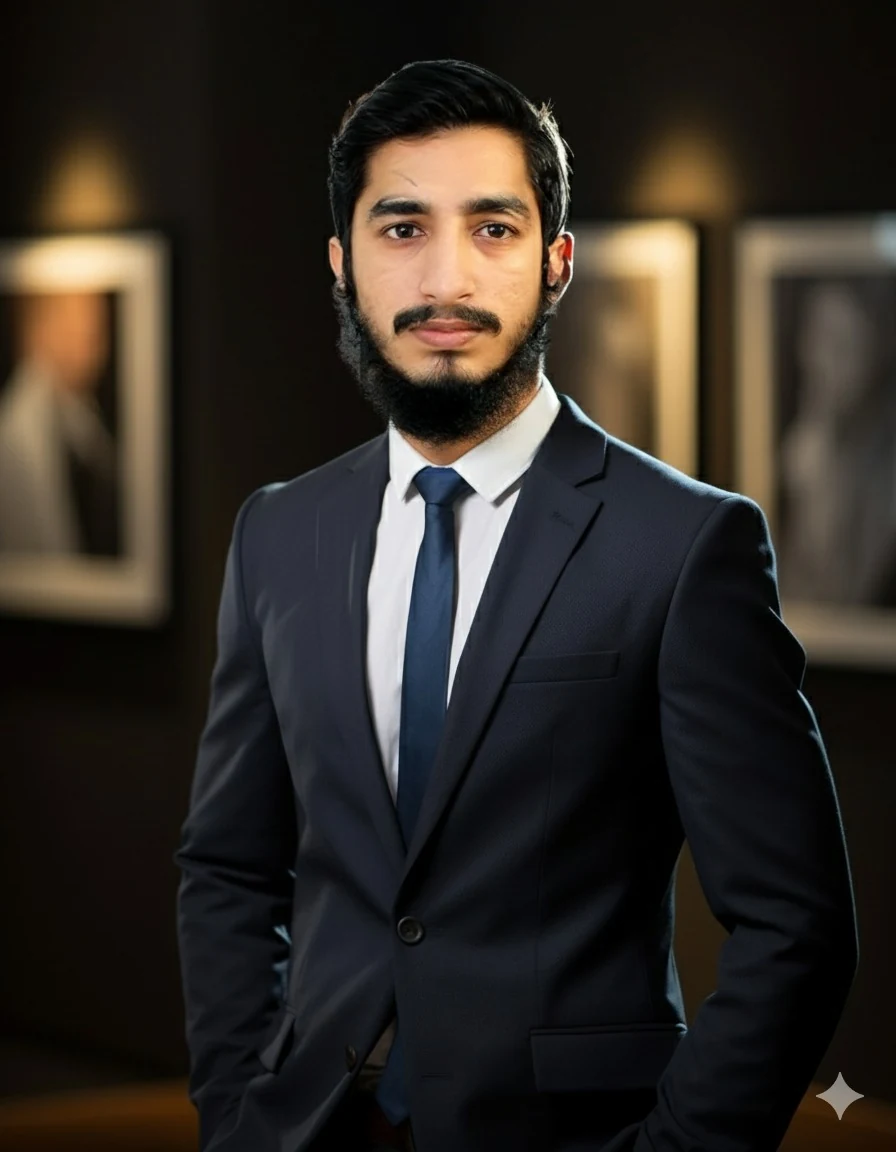
Saad Danish is a co-founder and director of Nest Fumigation Services Private Limited, a licensed pest-control and fumigation company based in DHA Phase 4, Karachi. He oversees the company's administration, client services, and marketing, working alongside NFS's technical team to deliver residential and commercial pest management across Karachi — from termite proofing and general pest control to HACCP and Sindh Food Authority compliance programmes for food, warehouse, and industrial clients. Nest Fumigation Services is ISO 9001:2015 certified and a member of the SPMA (Sindh Pest Management Association), PPMA, and the Karachi Chamber of Commerce and Industry.
More about our team →