Commercial Pest Control in Karachi: AMC, SLA, and Audit-Trail Pest Management for B2B Operators

Roughly eighty commercial accounts across Karachi — offices, F&B, hotels, hospitals, warehouses and factories — on annual contracts with written SLAs and ISO-compatible logbooks.

Request a Site Survey Call +92-311-1101810 WhatsApp
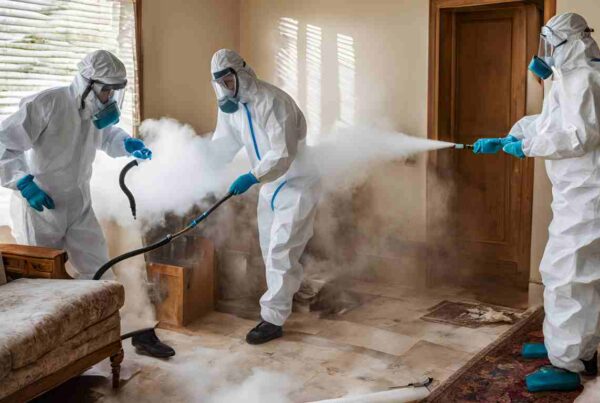
Nest Fumigation Services technician treating a commercial kitchen in Karachi
ISO 9001:2015· SPMA member· PPMA member· KCCI member· ★ 4.9 (175 Google reviews)
Home Industries Commercial Pest Control Karachi

Commercial pest control in Karachi is a contract business, not a one-off service. The buyer is a facility manager, an HSE lead, an ISO coordinator, an F&B QA head, or a chain procurement office — and what they sign is an Annual Maintenance Contract with a defined visit cadence, a written Service Level Agreement on response time, a structured audit-trail logbook, and monthly reporting that survives a Sindh Food Authority inspection or a third-party ISO 22000 audit. The chemistry is the easy half. The documentation, the after-hours scheduling, the chain-wide protocol standardization, and the way the work integrates with the client's own compliance system are the half that decides whether a contract renews at month twelve.

We run roughly eighty commercial accounts across Karachi from our DHA Phase 4 office — restaurants on Tariq Road and Boat Basin, office towers along Shahra-e-Faisal and II Chundrigar Road, retail outlets in Clifton, hospitals across DHA and Clifton, warehouses and godowns in SITE Area and Korangi Industrial Area, factories in Bin Qasim and Landhi, and serviced apartments around the airport corridor. This is our commercial pest control pillar — the hub page for every B2B vertical we cover. If you already know your vertical, the sub-pages below go deeper than this page can. If you are scoping a multi-site contract, building out a buyer-audit response, or trying to figure out what an AMC actually buys you, this is the right starting point.

This page is written for the buyer, not the residential householder. Founder Saad Danish runs new commercial onboardings personally — see his founder bio for Saad Danish for the operating-side credentials. The broader service map sits on our pest control Karachi hub.

Choose your vertical
Office & Plaza
Retail
F&B
Hotel
Healthcare
Warehouse / Godown
Factory

Why commercial pest control in Karachi is a different operating model

The chemistry overlaps with residential work. Indoxacarb 0.6% Advion gel runs in commercial kitchens the same way it runs in DHA bungalow kitchens. Bromadiolone 0.005% wax block runs in a warehouse perimeter station the same way it runs around a Clifton compound wall. Bifenthrin 7.9% Talstar handles outdoor cockroach migration in both. What changes is everything wrapped around the chemistry — and it changes enough that operators who try to scale residential workflows into commercial accounts lose those accounts inside two quarters.

Contracts, not call-outs.

Commercial B2B in Karachi buys annual maintenance. A factory does not have a rodent problem the way a house does — the pressure profile is continuous, structural, and tied to drainage, trucking, and neighbouring vegetation. A hotel does not have a bed bug problem in the same way a guest room has a bed bug problem — the risk profile resets every check-in. The only sustainable model is a continuously monitored programme on a defined cadence, billed monthly or quarterly against an annual contract. Per-visit billing creates a perverse incentive to delay attention, and procurement offices know this. Every commercial account we run sits on an AMC.

SLA-defined response.

A guest-facing sighting in a hotel lobby or restaurant dining room is a brand event, not a pest event. A Periplaneta americana on a hotel breakfast buffet costs more in TripAdvisor damage than the entire annual contract. The SLA on guest-facing commercial properties compresses response from "next available slot" to four hours. Hospitals on contract get the same four-hour SLA for any patient-zone sighting. Warehouses and back-of-house industrial floors run on a twenty-four-hour SLA. Off-contract emergency response is available but carries a thirty-percent premium — and a procurement office that has called for off-contract emergency twice in a quarter usually signs an AMC by the third quarter.

Audit-trail documentation.

Every commercial visit generates an ISO 9001:2015-compatible logbook entry: zone-by-zone treatment record, chemistry name and batch number, per-station inspection result on rodent stations, technician sign-off, QA counter-signature where required, and any deviation notes. We retain the log for seven years against the SECP industrial-contractor audit horizon. Sindh Food Authority inspectors, Sindh Health Department auditors, third-party ISO 9001:2015 and ISO 22000 auditors, and direct customer audits all pull from this documentation. We provide it without being asked — the audit pack is the contract.

After-hours scheduling.

Restaurants get treated between 23:00 and 02:00 after the kitchen closes. Hotels get treated between guest checkout and the next check-in. Hospitals get treated during minimum-occupancy windows coordinated with the ward sister. Schools get treated on weekends and holidays. Offices in the II Chundrigar and Shahra-e-Faisal corridor often request weekend treatment to avoid disrupting trading-floor work. The chemistry does the same work either way; the timing protects the operation.

Chain-wide protocol standardization.

Multi-outlet chain clients — F&B chains with three to twelve Karachi outlets, retail chains across Clifton and DHA commercial pockets, healthcare groups with multiple clinics — need protocol standardization across locations. Same chemistry, same documentation format, same visit cadence, same SLA, same single point of contact for the procurement office. We currently service chain contracts at this scale and the centralized-billing structure is part of how we win them against larger national operators.

The seven verticals and how each one buys

Commercial pest control in Karachi splits into seven verticals that buy on different primary value propositions. This is the operator's view of how the market actually segments — not a marketing taxonomy.

Office and Commercial Plaza

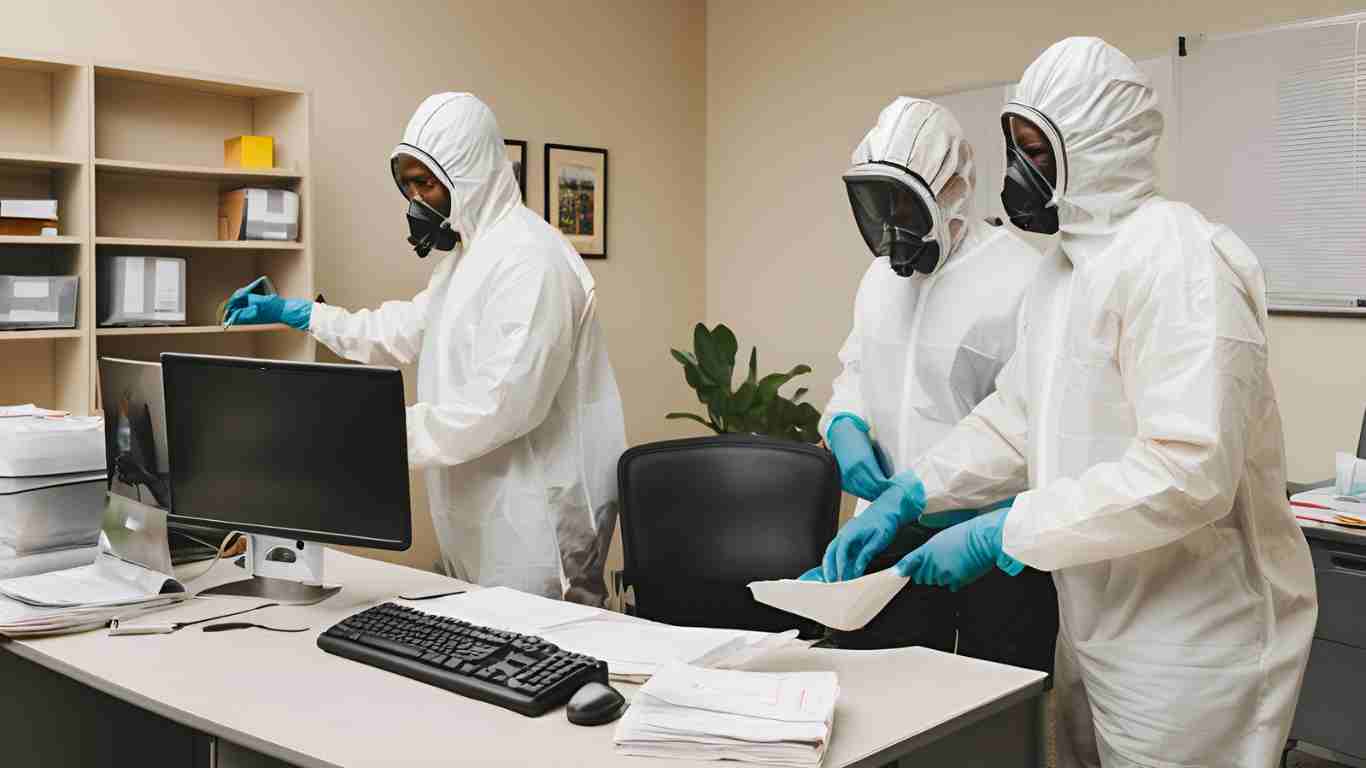
Office pest pressure is structurally low compared to F&B, but visibility is high. A single Blattella germanica sighting in a conference room, a Rattus norvegicus dropping behind a pantry coffee machine, or a Periplaneta americana in a marble lobby erodes professional perception faster than any equivalent residential sighting — and the facility manager hears about it within the hour. Office buyers want quarterly maintenance with same-day rapid response, audit-trail documentation for ISO 9001:2015 office certifications, and a clean pantry protocol that does not require shutting the floor.

Treatment uses Indoxacarb 0.6% Advion gel placed in inaccessible voids — under pantry counters, behind dishwashers, inside kick plates — never on visible surfaces. Pyriproxyfen IGR breaks German cockroach nymphal development. Perimeter Bifenthrin 7.9% Talstar handles ant trails and outdoor Periplaneta americana migration into the building shell. Pantries get gel-only treatment with no liquid spray near coffee machines, fridges, or food storage. Server rooms get rodent monitoring stations on the perimeter and acoustic checks for Rattus rattus in cable trays.

The cluster: Shahra-e-Faisal corporate towers, II Chundrigar Road finance and banking floors, DHA Phase 4 to Phase 8 commercial strips, Clifton corporate offices, and the Korangi airport-adjacent business park. Quarterly is the default; monthly is added for buildings with food courts or shared multi-tenant cafes.

Retail (Mall, Boutique, Showroom)

Retail buyers split into two profiles. Mall tenants on contract get coordinated mall-wide pest control through the mall facilities team — Dolmen and similar mall operators run programme contracts where individual tenants are covered under a master agreement. Standalone retail — boutiques in Clifton, designer showrooms in DHA Phase 6, luxury retail in Clifton Park Tower — buy their own contracts and the primary concern is presentation. A cockroach in a showroom carpet runs against the same brand-event logic as a hotel lobby.

Standalone retail runs on quarterly visits with same-day rapid response. Treatment is gel-only in customer-facing areas, with residual chemistry restricted to back-of-house storage and staff areas. Mosquito management on outdoor display windows and entryway terraces uses Bti larvicide on standing water plus targeted adulticide misting at dusk in Aedes aegypti season.

Supermarkets and grocery retail sit in their own bracket — open food on the shelf, high-turnover stockrooms and Sindh Food Authority exposure change the protocol. We cover that separately in supermarket and retail pest control in Karachi.

F&B (Restaurant, Cloud Kitchen, Cafe)

F&B is the highest-pressure commercial vertical in Karachi and the one where AMC structure matters most. Restaurants on Tariq Road, in PECHS, on Boat Basin in Clifton, and along Khayaban-e-Bukhari and Khayaban-e-Shahbaz run continuous food trail, continuous waste production, and continuous pest pressure year-round. Cloud kitchens in Tariq Road, Bahadurabad, and DHA Phase 6 run the same pressure profile inside a tighter operational footprint.

The protocol is HACCP-aligned kitchen IPM. We do not liquid-spray near food-contact surfaces. Indoxacarb 0.6% Advion gel placed under cooking ranges, behind dishwasher gaskets, in the kick-plate void beneath prep tables, and on the back side of the cold-line. Pyriproxyfen IGR addresses Blattella germanica nymphal stages and breaks the resistance curve that hits any kitchen running on monthly broad-spectrum spray. Bio-enzyme drain treatment handles Periplaneta americana breeding in floor drains and grease traps; the residual Bifenthrin 7.9% Talstar band around floor drains is applied to the concrete perimeter, never to the drain surface itself. Rodent stations on the receiving-bay perimeter and outside the waste-handling area use bromadiolone wax block in tamper-resistant T-Rex or Aegis housings, GPS-tagged and numbered.

Documentation is zone-by-zone: kitchen, dry store, cold store, dishwash, dining, staff toilet — each tracked separately, with chemistry batch numbers per visit and technician sign-off retained for Sindh Food Authority and ISO 22000 audits. Monthly cadence is standard. Full HACCP-grade protocol depth for food manufacturers — pharma-style monitored-substance-only IPM, allergen-zone separation, buyer audit prep — sits on our food manufacturing IPM Karachi page.

Hotel and Serviced Apartment

The bed bug protocol is the load-bearing service line for hotel work in Karachi. Cimex hemipterus — the tropical bed bug, dominant in South Asia — travels with guests, and a single missed turnover treatment can seed a floor in three weeks. Our heat treatment runs at 55C and above for ninety minutes minimum, monitored by remote sensors in voids and mattress cores. Heat is paired with a residual Deltamethrin 2.5% WG K-Othrine band on cracks, baseboards, and behind headboards. Mattress encasement is standard after treatment. See our bed bug treatment page for the chemistry-vs-heat breakdown.

Beyond bed bugs, hotels get the standard guest-room cockroach gel circuit using Indoxacarb (no spray), Aedes aegypti mosquito management on outdoor terraces and pool decks (Bti larvicide on standing water plus targeted adulticide misting on dusk schedule), and rapid-response sighting service on the four-hour SLA. Karachi cluster: NIPA and Korangi airport-adjacent serviced apartments take same-day inspection-to-treatment for international-guest bed bug risk; DHA Phase 6 and Phase 8 boutique hotels run monthly contracts; Clifton five-star properties pair pest control with terminal disinfection between high-profile guest stays.

Full hotel protocol — turnover treatment workflow, guest-complaint response, AM/PM shift coordination with housekeeping, ISO 22000 hotel-kitchen alignment — is on our hotel pest control Karachi page.

Healthcare (Hospital, Clinic, Pharmacy)

Hospital pest control coordinates with the facility's Infection Prevention and Control committee — we are an inputs vendor, not an autonomous operator. WHO IPC-aligned IPM means no broad-spectrum indoor spraying in patient zones, period. Targeted Indoxacarb gel bait and Pyriproxyfen IGR for Blattella germanica management. Bti larvicide for Aedes aegypti breeding sites on rooftops, drains, and AC condensate trays. Residual Deltamethrin 2.5% WG K-Othrine restricted to non-patient zones — back-of-house, kitchen, laundry, generator room, perimeter.

Rodent management uses tamper-resistant bromadiolone stations on the building perimeter and snap traps inside — no anticoagulant indoors near patient zones, no tracking powder anywhere on healthcare premises. Rattus norvegicus is the ground-floor species; Rattus rattus is the upper-floor and false-ceiling species; Mus musculus appears around stored linen and pharmacy carton storage. Documentation supports ISO 9001:2015 quality system audit, SECP health-license renewal, and Sindh Health Department inspection.

Warehouse and Godown

Warehouse work in Karachi is a different chemistry stack. Phosphine fumigation handles stored grain, fabric, paper goods, and packed consignments — exposure runs 24 to 72 hours depending on ambient temperature and target species (longer at cooler temperatures and for stored-product beetle eggs). The fumigation cycle is sealed-tarpaulin or sealed-warehouse, monitored with phosphine concentration sensors, and follows SPMA fumigation protocol. We hold the fumigation operator certifications required for the work.

Domestic stored-product only. We are not NPPO-registered and do not offer export, ISPM-15 or shipping-container fumigation.

Stored-product insect monitoring uses pheromone traps for Tribolium castaneum (red flour beetle) and Sitophilus oryzae (rice weevil) — these tell us when to schedule the next fumigation cycle without over-treating. Perimeter rodent network uses tamper-resistant bromadiolone stations spaced per SPMA guidelines around the building shell. Common locations: SITE Area godowns, Korangi Industrial Area factories, Port Qasim warehouses, Landhi industrial estate, Federal B Area textile godowns. Buyer-audit search behaviour and procurement language both use "warehouse fumigation" as the head term — leading with "pest control" misreads the buying intent on this vertical.

Factory (Manufacturing, Industrial)

Factory pest control in Karachi is structurally a rodent control programme with insect management bolted on. Rodent damage to packaging, cables, raw materials, and PLC wiring is the recurring pain that drives the buyer to call us — and it scales fast because Bandicota bengalensis, the Karachi-specific large bandicoot rat common around Korangi and Landhi nullahs, can take an eight-millimetre HDPE cable conduit out as if it were soft wood. Adult body weight runs 800 grams to 1.5 kilograms — four to six times Rattus norvegicus — and retail-strength rodenticides do not carry enough anticoagulant per feed to kill a bandicoot reliably.

Bromadiolone 0.005% wax block in tamper-resistant T-Rex or Aegis stations is the default; brodifacoum 0.005% rotates in on long-running accounts where consumption suggests resistance; zinc phosphide 2% acute is reserved for non-food sites only. Network density runs 15 to 25 stations per acre of footprint, GPS-tagged with a numbered drawing held in the audit pack. Full factory rodent control depth — species map, station network design, audit-trail documentation, AMC structure — sits on our factory rodent control Karachi page. This is the deep dive on the highest-spend commercial vertical in our book.

Insect management on factory accounts adds Indoxacarb gel in worker canteens, Bifenthrin perimeter treatment around the building shell, and stored-product monitoring with pheromone traps in raw-material warehouses.

Scoping a contract or preparing for an audit?
Same-day inspection slot for new commercial enquiries on weekdays. Founder-led onboarding.
Request a Site Survey Call +92-311-1101810

Karachi commercial geography — where each vertical clusters

Commercial pest pressure in Karachi clusters by zone, and the service model adjusts to each cluster.

SITE Area is the warehouse and factory core for textiles, chemicals, and general manufacturing. Phosphine fumigation cycles for stored goods, perimeter bromadiolone rodent networks, stored-product insect monitoring, and worker-canteen kitchen IPM are the standard service mix. Annual contracts run quarterly or monthly cadence depending on goods stored.

Korangi Industrial Area carries leather, plastics, packaging, and a heavy food-manufacturing footprint. Korangi accounts skew toward weekly cadence for the food-mfg lines and monthly for general manufacturing. Bandicoot pressure is the highest in the city here, and the nullah network drives the perimeter station network density.

Clifton is high-end retail, boutique hospitality, and corporate offices. Brand-event sensitivity is high; quarterly maintenance with same-day rapid response is standard. Bed bug risk in Clifton hotels via international guests is real.

DHA commercial pockets (Phase 4 to Phase 8 boulevards, Khayaban-e-Bukhari, Khayaban-e-Shahbaz, Khayaban-e-Sehar) — cafes, boutique service businesses, clinics, salons, boutique grocery. Quarterly cadence with rapid-response sighting service. Bundle pest control with terminal cleaning for hospitality clients.

II Chundrigar Road is the finance and banking corridor. Corporate office towers with high-visibility lobby and trading-floor presentation requirements. Quarterly maintenance, weekend treatment windows, ISO 9001:2015 audit support.

Shahra-e-Faisal is the main corporate office corridor — multi-tenant towers, anchor offices, ground-floor retail. Same-day rapid response, quarterly maintenance, monthly for buildings with food courts.

Tariq Road and PECHS food strip is a continuous F&B cluster. Monthly HACCP-aligned contracts are standard. American and German cockroach pressure feed off the shared external drainage and waste collection network.

Bin Qasim and Port Qasim are the warehousing cluster. Phosphine fumigation cycles, fumigation certificates, and stored-product monitoring dominate. Rodent perimeter network is non-negotiable for buyer audits.

Landhi industrial estate is mixed food storage, packaging, and general manufacturing. Bandicoot pressure off the nullah network is heavy.

For multi-residential buyers — society blocks, gated communities, apartment compounds — see our housing society pest control Karachi page. The contract structure is different from B2B commercial (society admin signs against a maintenance-cost line in the budget, not a procurement budget) and the page covers that vertical separately.

How a commercial AMC actually works

The contract structure decides whether the work sustains. Single-shot treatments do not work at commercial scale — the pressure profile is continuous, and per-visit billing creates the wrong incentive on both sides of the contract.

Facility teams weighing a contract against running pest control with their own staff will find that comparison — licensing, chemical liability, documentation burden and real cost — in in-house vs outsourced pest control.

Tier structure, per-visit pricing and the audit-ready service log are set out on our annual and monthly pest control contract (AMC) page. Sector protocols live on their own pages — office, warehouse and school pest control each run a different inspection rhythm — and a building-wide programme for a residential or mixed-use tower is scoped by our building fumigation team after a floor-by-floor survey.

1
Pre-quote walkthrough

We do not quote a commercial contract over the phone. The pricing depends on actual footprint, perimeter exposure, drainage proximity, neighbouring vegetation, vertical (F&B versus office versus warehouse), and required audit-pack scope. Before we issue a number, our team walks the site with the facility manager or QA head — sixty to ninety minutes for office and warehouse, two to three hours for a five-thousand-square-metre factory or hotel — and inspects perimeter, receiving and dock areas, food and storage zones, production or guest-facing areas, finished-goods or back-of-house storage, and external drainage. The output is a station-network drawing for any rodent component, a recommended chemistry, a visit-cadence proposal, and a written quote with the inspection log and photographs.

2
Visit cadence options

Weekly for high-pressure food-manufacturing, godowns adjacent to nullahs, plants with active receiving-bay pressure, and any site within the first ninety days of a new contract while the baseline is being established. Sites running buyer audits on a tight cycle — SGS, Bureau Veritas, customer-direct audits — also default to weekly. Bi-weekly for sustained mid-range accounts once the baseline shows stable consumption. Monthly for low-risk steady-state — typically smaller manufacturing footprints with clean ninety-day history and no nullah proximity.

3
Documentation pack

Per-visit log: date, time, technician of record, per-station inspection result (consumed, partial, untouched, station damaged, station moved), bait replenishment quantity, dead rodents recovered and disposal route, new entry points identified, and any recommendation issued. Technician sign-off plus QA counter-signature on food-manufacturing accounts. Monthly trend chart of per-station consumption — auditors increasingly ask for the chart rather than the raw log. Retention is seven years against the SECP industrial-contractor audit horizon. All food-mfg accounts get the audit pack delivered to the QA inbox in soft copy on the first of each month.

4
SLA structure

Four things in writing. Visit cadence (weekly, bi-weekly, or monthly per scope). Response time to unscheduled call-out — four hours for any sighting reported on a guest-facing property, twelve hours for any Sindh Food Authority-regulated zone, twenty-four hours for any other contract account. Threshold trigger — if per-station consumption rises thirty percent above the rolling baseline, we automatically escalate to additional inspection, entry-point sealing audit, and chemistry rotation review at no additional charge. Documentation retention — seven years on file plus monthly soft-copy delivery.

5
Chemical rotation

We maintain visit-by-visit rotation logs to manage Cimex hemipterus and Blattella germanica resistance development. Indoxacarb gel rotates with Fipronil-based gel on a quarterly cycle. Deltamethrin residual rotates with Bifenthrin on a six-month cycle on persistent properties. Bromadiolone rotates to brodifacoum on long-running rodent accounts where consumption suggests resistance.

6
Dead-rodent disposal protocol

Each carcass double-bagged in heavy-mil black polyethylene, logged in the visit report with location and approximate body weight (for species inference), transported off-site for incineration via a licensed waste handler. For food-manufacturing accounts the disposal route is documented in the QA file. We do not flush carcasses into the drainage network — the practice is widespread among informal operators in Karachi and it routes the carcass into the same nullah that re-seeds the next colony.

Commercial pricing — 2026 indicative ranges

Final pricing comes off a site walkthrough. The ranges below cover the typical scope across our 2026 commercial book.

Indicative commercial contract rates, Karachi 2026
Service Property Monthly contract per visit (PKR)
Office1,500 – 5,000 sqft7,500 – 14,000
Office5,000 – 15,000 sqft14,000 – 28,000
Plaza / multi-tenantPer 5,000 sqft12,000 – 22,000
Retail / boutiqueSingle outlet6,000 – 12,000
Restaurant kitchen1,500 – 3,000 sqft8,000 – 14,000
Cloud kitchen1,500 – 2,500 sqft8,000 – 12,000
Hotel (per room standard)Inspection1,200 – 2,500
Hotel (per room)Bed bug heat + chemical22,000 – 30,000
Hospital / clinic1,500 – 3,000 sqft10,000 – 18,000
WarehousePer 1,000 sqft1,200 – 2,400
Phosphine fumigationPer ton stored goods800 – 1,500
Factory (small footprint, 15-station)Monthly cadence7,500 – 12,000
Factory (mid footprint, 25-station)Bi-weekly cadence14,000 – 24,000
Factory (large footprint, 40-station)Weekly cadence28,000 – 55,000
Food-manufacturing audit-pack premiumAdd-on+15 to 20 percent
Initial network installation and baseline surveyOne-time18,000 – 45,000
Emergency call-out (non-contract)Per visit12,000 – 28,000

Rates include compliance-grade documentation, after-hours scheduling, technician sign-off, audit-ready logbook entries, and bait replenishment within scope consumption. Multi-outlet chain contracts qualify for centralized billing and unified protocol standardization at the same per-outlet rate. Rates exclude entry-point sealing works (rebated at cost on separate scope), proofing-hardware supply (door sweeps, vent screens), and Sindh Food Authority audit accompaniment if requested separately. For residential and per-service breakdowns see pest control prices Karachi 2026.

Why NFS for commercial pest control

ISO 9001:2015 certified SPMA member PPMA member KCCI member 7-year document retention 4-hour guest-facing SLA

Nest Fumigation Services Private Limited holds ISO 9001:2015 quality-management certification, full membership of the Structural Pest Management Association (SPMA) and the Pakistan Pest Management Association (PPMA), and membership of the Karachi Chamber of Commerce and Industry (KCCI). The credential stack is the procurement-grade trust set that a Karachi commercial buyer — QA head, facility manager, ISO coordinator, chain procurement office — expects to see in the technical-bid envelope.

Our public Google Business Profile carries 175 verified reviews on a two-year-old profile — public-record social proof that supplements the technical credentials. Office is at Plot #14, 2/1 2nd Gizri Street, DHA Phase 4, Karachi 75500, on Monday to Saturday from 09:00 to 21:00. Founder Saad Danish runs new commercial-account onboardings personally — the multi-month rhythm of an AMC sits under one accountable point of contact rather than rotating across a sales pipeline.

Across our commercial book we currently operate in SITE Area, Korangi Industrial Area, Bin Qasim, Landhi, F.B. Industrial Area, North Karachi Industrial Area, Clifton, DHA Phase 4 to Phase 8, Shahra-e-Faisal, II Chundrigar, NIPA, the airport corridor, Tariq Road, PECHS, Bahadurabad, and the West Wharf cargo cluster. Response is twenty-four hours for any contract account on a standard call-out, twelve hours for a Sindh Food Authority-regulated site, and four hours for any guest-facing property on the AMC SLA. Same-day inspection slot for new commercial enquiries on weekdays.

Request a site survey

Call us at +92-311-1101810 or email contact@nestfumigationservices.com. Mon to Sat, 09:00 to 21:00. Walk in to our DHA Phase 4 office at Plot #14, 2/1 2nd Gizri Street, or schedule a site walkthrough directly. Founder Saad Danish runs new commercial onboardings personally.

Same-day inspection slot for weekday enquiries.

Whether you are scoping a single restaurant, a chain procurement contract, a hospital IPC tender, a factory rodent AMC, or a warehouse fumigation cycle, the conversation starts here and we route you to the right vertical specialist. For service-line depth see our pages on factory rodent control Karachi, hotel pest control Karachi, food manufacturing IPM Karachi, housing society pest control Karachi, rodent control, bed bug treatment, and the broader pest control Karachi hub.

Commercial pest control — FAQ

How does a commercial pest control AMC differ from a residential contract?

A residential contract is service-led — quarterly visits, residual chemistry, one-page job card per visit, no audit pack. A commercial AMC is buyer-audit-led — defined visit cadence against a written scope, four-hour or twenty-four-hour SLA on response, ISO 9001:2015-compatible audit-trail documentation, monthly trend reporting, and chemistry rotation logs. The chemistry overlaps; the documentation, response-time SLA, after-hours scheduling, and chain-wide protocol standardization are what the buyer is actually paying for at commercial scale.

How do you coordinate pest control across a multi-site chain?

Centralized billing under one procurement office, unified documentation format across all outlets so the QA team can compare any two sites on the same template, standardized treatment protocol so the chemistry and station network are consistent, and a single point of contact who routes call-outs to the right Karachi crew. We currently service chains running three to twelve Karachi outlets and the structure scales beyond that without changing the model — the limit is operational coverage in a city, not contract architecture.

What audit-trail documentation do you provide for ISO 9001:2015 and Sindh Food Authority?

Per visit: zone-by-zone treatment log, chemistry name and batch number, per-station rodent inspection result, technician sign-off, QA counter-signature on food-manufacturing accounts, dead-rodent disposal route via licensed handler, and any deviation notes. Monthly: trend chart of per-station consumption, soft-copy audit pack to the QA inbox on the first of the month. Annual: rotation logs, baseline-versus-current comparison, recommendation summary. Retention is seven years against the SECP industrial-contractor audit horizon. Sindh Food Authority inspectors, ISO 9001:2015 third-party auditors, ISO 22000 food-mfg auditors, and direct customer audits all pull from the same pack.

What is your response SLA on a guest-facing sighting?

Four hours from the time the report is logged with our DHA Phase 4 office, for any guest-facing property on an AMC — hotel, restaurant, clinic, serviced apartment, customer-facing retail. Twelve hours for any Sindh Food Authority-regulated zone. Twenty-four hours for warehouses, back-of-house industrial floors, and offices. Off-contract emergency response is available within the same SLA window but carries a thirty-percent premium against the contract rate.

What makes B2B commercial pest control different from residential, in plain language?

Residential customers buy a service. Commercial buyers buy a contract that supports their compliance system. The single biggest difference is what happens after the technician leaves: in residential the job is over, in commercial the documentation has to survive the next buyer audit, the next ISO surveillance visit, the next Sindh Food Authority inspection. We do not change the chemistry between residential and commercial; we change the documentation discipline, the response SLA, the after-hours scheduling, the protocol standardization across outlets, and the contract structure from per-visit to annual maintenance. That bundle is what a procurement office is actually buying when they sign an AMC, and it is what decides whether the contract renews at month twelve.

Documents for facility and QA managers

These are the working documents we use on commercial accounts, published in full and free to download — no form, no email required. Run the self-audit before you talk to any contractor, ours included: it shows you where an inspector would find a way in, and it makes the quotes you receive comparable. Sector protocols are set out on our restaurant and hospital pest control pages, and the contract structure behind them on the AMC page.

Facility Pest-Risk Self-Audit Generic 5-minute self-audit. Tick what is true; every unticked box is a gap. Download PDF →
Factory / Industrial Checklist Perimeter baiting density, structural exclusion, stored-product monitoring. Download PDF →
Food & HACCP Checklist For Sindh Food Authority and HACCP-audited kitchens and production floors. Download PDF →
Pharma / GMP Checklist Cleanroom-adjacent zoning, documentation depth, WHO-GMP audit expectations. Download PDF →
Warehouse & Godown Checklist Phosphine cycles, gas clearance, dock-door controls, pallet-borne infestation. Download PDF →
Hotel & Hospitality Checklist Guest-facing SLA, bed bug protocol, back-of-house and laundry routes. Download PDF →
Housing Society Checklist Shared risers, garbage chutes, common areas and committee-level scope. Download PDF →
Scope of Work (sample) What a professional pest contract should specify — before you sign one, with us or anyone else. Download PDF →
IPM Service Logbook (sample) The per-visit record an SFA, HACCP, ISO 22000 or customer auditor asks to see. Download PDF →

The scope-of-work and logbook pages are illustrative samples — site names and figures in them are fictional. We are an ISO 9001:2015-certified pest management company and a member of SPMA and PPMA; we are not a government-registered phytosanitary operator, so export, ISPM-15 and container fumigation are outside our scope and we will say so rather than take the job.

Call Site Survey